

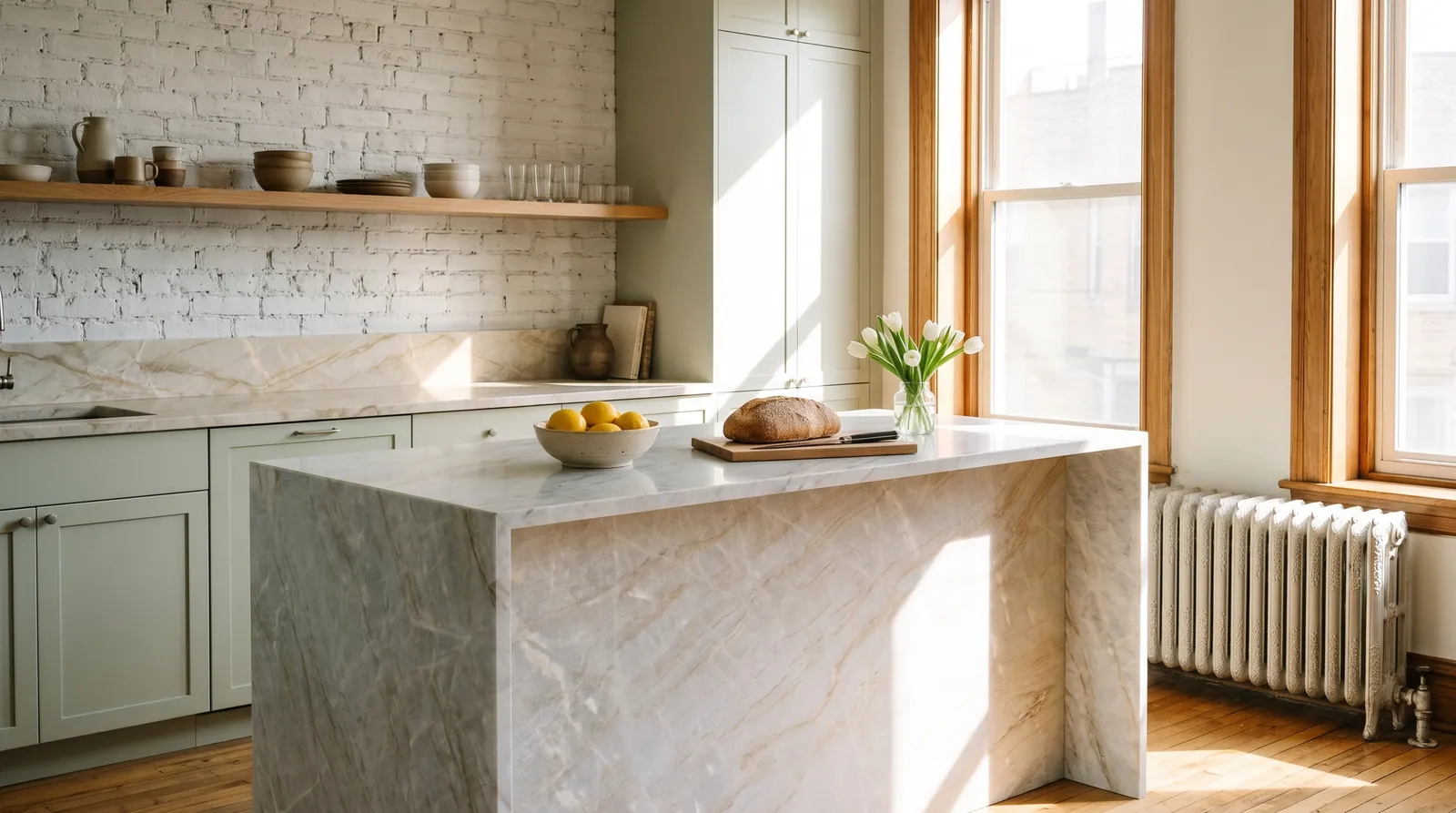
Taj Mahal quartzite countertops have the soft veining of marble and the everyday durability of quartzite. What draws many homeowners to this Brazilian stone is its color. Against white cabinets, a pale slab can look almost ivory. Set a walnut door beside the same piece, and the sandy tones in the stone become easier to see.
Our Bensenville showroom has Taj Mahal slabs in both 2 cm and 3 cm. This guide covers how to choose a slab, pair it with cabinets and backsplash tile, and care for it once it’s installed.
What Is Taj Mahal Quartzite?
Taj Mahal is a natural quartzite quarried in Brazil. It began as quartz-rich sandstone. Under heat and pressure, the quartz grains recrystallized into a dense stone. That is why a countertop with such delicate-looking veins can stand up well to daily kitchen use.
You may come across names like “Taj Mahal granite,” “Taj marble,” or simply “Taj quartz.” Genuine Taj Mahal belongs to the quartzite family. Engineered quartz with a similar name is a manufactured surface with its own care instructions, so ask to see the material type on the slab label before you approve your selection. For a closer comparison, see Quartz vs. Quartzite and our Chicago Quartzite Countertop Guide.
Colors and Natural Variation
Most Taj Mahal slabs have a cream or light beige background with fine taupe, honey, or muted gold veins. Some have long, gently angled lines. Others have broad, cloudy areas with hardly a distinct vein. A slab described as white Taj Mahal quartzite may look cooler and paler, especially beside a more golden piece.
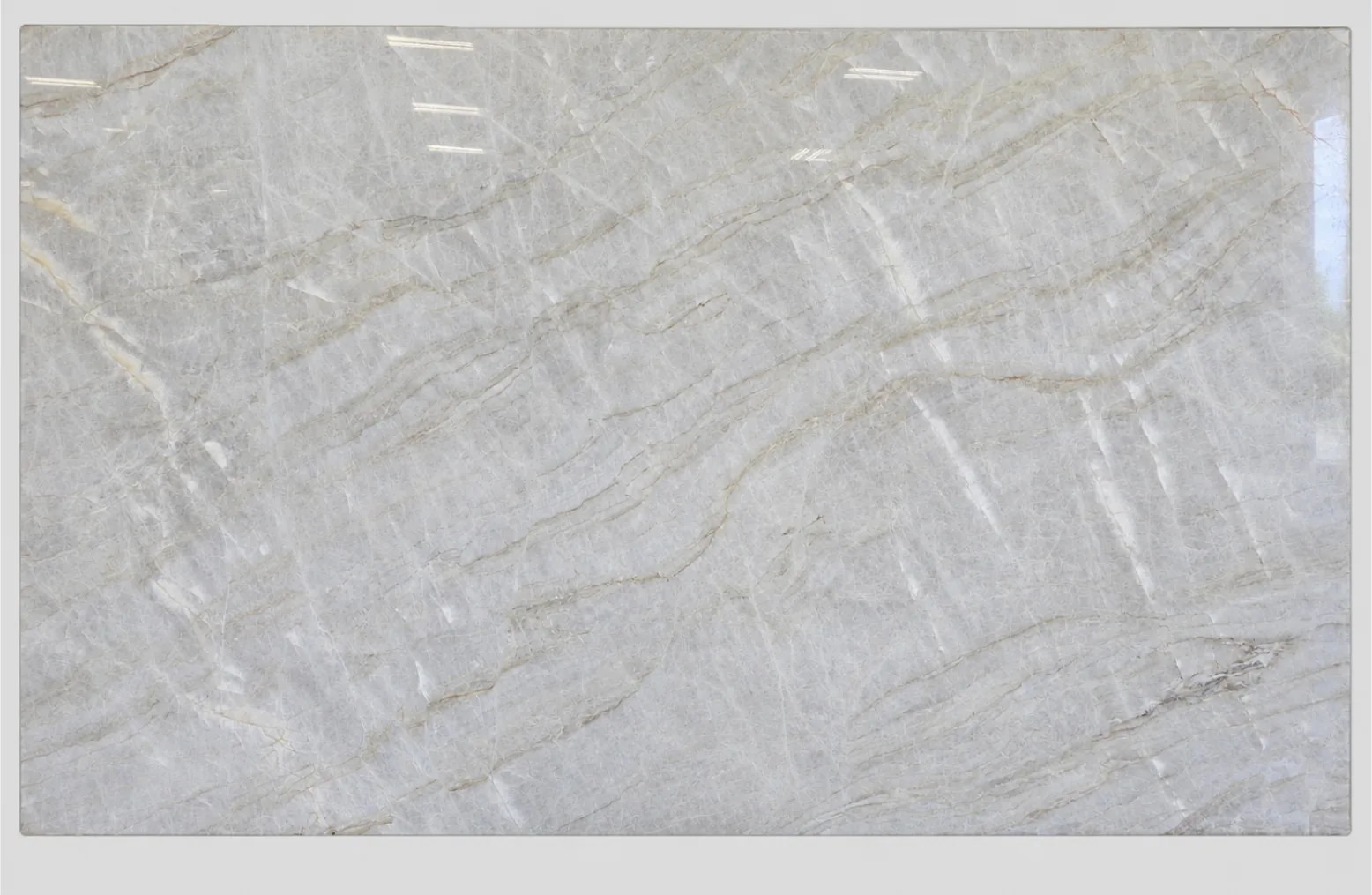
If you’re choosing stone for an island, ask to see where its outline would sit on the slab. A vein you love in a photo might fall inside the sink cutout. Start with our live slab inventory, then use this guide to choosing a stone slab in person to plan your visit.
Polished, Honed, Leathered or Satin?
Polished Taj Mahal quartzite reflects light and makes the veining easy to follow. Honed and leathered Taj Mahal quartzite soften the glare and hide everyday marks better. The terms satin and honed can overlap between suppliers, so handle a sample of the actual finish.
| Finish | Appearance | In daily use | Works well for |
|---|---|---|---|
| Polished | Glossy, clear vein definition | Dried droplets can catch the light | An island with subtle veining |
| Honed | Smooth, matte surface | Less glare, though oily marks may show | A bright kitchen with large windows |
| Leathered | Gently textured, low sheen | Fingerprints are less obvious; texture takes a little more wiping | A busy family island |
| Satin | Soft sheen that varies by supplier | Check fingerprints and reflections on the sample | A kitchen where you want a slight glow |
Thickness changes the visible edge as well. A 2 cm slab gives a slimmer profile, while 3 cm gives a more substantial edge. See our countertop finish comparison.
Is Taj Mahal Quartzite Durable? Stains, Etching and Care
Quartz, the main mineral in quartzite, ranks about 7 on the Mohs hardness scale. Genuine quartzite generally resists the dull etch marks that lemon juice leaves on marble. Staining is a separate issue: oil can soak into absorbent areas and leave a dark patch, so blot spills promptly, especially around the cooktop.
For daily cleaning, use mild soap, warm water, and a soft cloth. To check the sealer, place a few drops of water on a clean, dry area and wipe them away after several minutes. If the stone darkens, it may be time to reseal. Use a trivet for hot cookware, and see our countertop heat guide and seven everyday habits that can damage countertops.
Best Cabinet Colors for Taj Mahal Quartzite
White cabinets. Start with a warm white that picks up the slab’s ivory background. A bright, blue-white door can make a creamy slab look yellower than it does on its own. Explore more countertops for white cabinets.
Dark cabinets. Navy, deep green, and soft black give the pale stone a clear outline. On an island with dark cabinets, even a quiet section of Taj Mahal provides enough contrast.
Oak and maple cabinets. With honey oak, try an ivory slab with taupe veins to give the eye a break from the golden wood. With pale maple, a warmer slab adds color to an otherwise light kitchen.
Brown and walnut cabinets. Look for a broad cream area above richly grained drawers. A fine brown vein can echo the walnut without competing with it.
Gray cabinets. Compare the door with the grayest vein in the slab. A warm gray usually feels more cohesive with beige stone than a cool one.
Bring one cabinet door to our Bensenville showroom and we’ll set it against two or three slabs so you can see the pairing at full scale. Browse our project gallery and kitchen island ideas for inspiration before your visit.
Backsplash Ideas for Taj Mahal Countertops
A full-height Taj Mahal backsplash carries the stone from the counter to the upper cabinets. Behind a range, ask to see the proposed cut layout so the most interesting vein isn’t hidden behind the hood.
For tile, warm white subway tile gives the stone a quiet backdrop. Cream zellige adds subtle shade variation and an uneven reflection. If the slab already has bold movement, start with plain tile; a busy pattern or icy gray glaze can draw attention away from the stone. See How to Match Countertops and Backsplash.
Taj Mahal Quartzite in Bathrooms
On a bathroom vanity, check where the sink opening will interrupt the veining. A quieter piece often works well on a narrow top, and an offcut may suit a shower niche. For wet areas, confirm the sealing details with your installer. Compare countertop materials for bathroom vanities.
Real Taj Mahal vs. Look-Alikes
Love the look but want a low-maintenance surface? Quartz that looks like Taj Mahal quartzite is a great choice. Look for a warm ivory background and fine, irregular veins, and view the full slab to see the pattern at scale. Engineered quartz needs no sealing and offers a consistent look from slab to slab. Cream-colored granites are another option if you like more visible mineral grains. We carry both quartzite and quartz, so you can compare them side by side in our showroom.
If a slab is labeled soft quartzite, ask for its geological classification. Some marble is sold under that description and can etch. Our team will tell you exactly what material and finish each slab is.
Frequently Asked Questions
Is Taj Mahal quartzite or granite?
It’s quartzite, not granite. Taj Mahal is a natural quartzite quarried in Brazil. Its pale veining can also resemble marble, which is why the names get mixed up.
Does Taj Mahal quartzite stain or etch?
Genuine quartzite generally resists etching from ordinary kitchen acids. It can absorb oil or colored liquids, depending on the slab and its sealer, so keep it sealed and wipe spills promptly.
Is Taj Mahal quartzite good for a kitchen island?
Yes. Its hardness suits everyday food prep, and an island gives long veins room to show. Review the cut layout before fabrication, especially if you’re adding a sink.
Where can I see Taj Mahal quartzite slabs near Chicago?
Visit our showroom in Bensenville to compare full slabs side by side. Call ahead to confirm the thickness and finish you want to see, and ask about a sample to take home.
See Taj Mahal Quartzite in Bensenville
Bring your cabinet door, backsplash sample, or kitchen sketch to 1090 Industrial Drive, Unit 5, Bensenville, IL 60106. We have over 4,000 slabs in our indoor showroom, and our own team handles measuring, fabrication, and installation. Call 773-632-1600 to schedule a visit, or request a free Quick Quote for your project.