

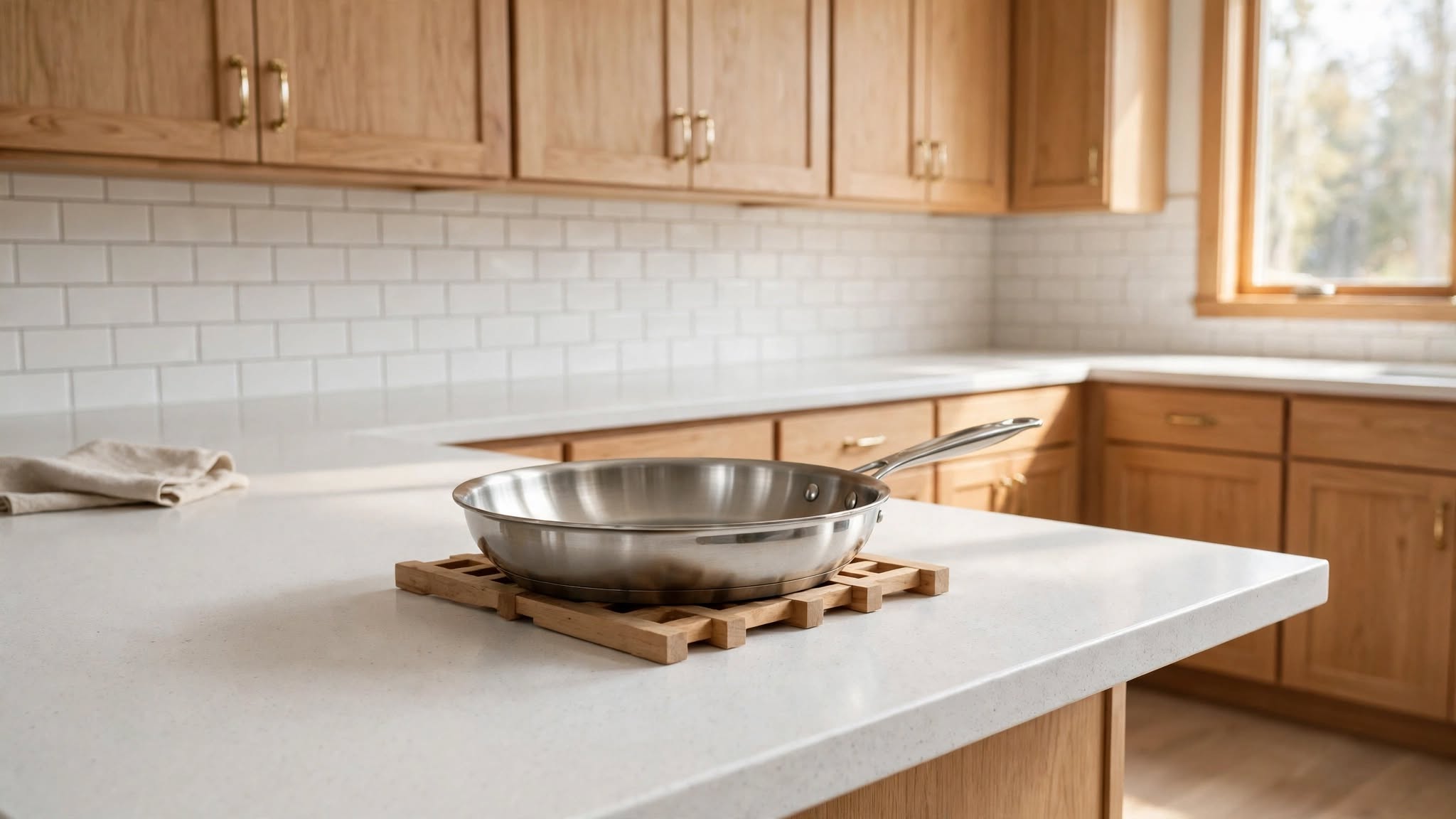
Do not place hot pans directly on quartz countertops. A pot taken straight from the stove can damage the resin holding engineered quartz together, leaving a permanent mark.
Granite, quartzite and soapstone tolerate heat better, but no countertop is risk-free. Using a trivet is the safest habit with any material. Even brief contact can leave a mark.
Choosing the right countertop material also depends on how you use your kitchen. Explore the quartz, granite and quartzite options at Chicago Countertop Co. to find a surface that suits your cooking habits.
Why Is Quartz Sensitive to Heat?
Engineered quartz combines natural quartz particles, pigments and polymer resins. The mineral resists heat, but the resin binder is vulnerable. A hot pan can alter the resin before affecting the stone particles. Because the resin runs throughout the slab, the problem is not necessarily limited to a removable surface coating.
Depending on temperature and contact time, quartz heat damage may appear as:
- Yellow or brown discoloration around the contact area.
- A cloudy or dull ring that remains after cleaning.
- A scorch mark or, less commonly, a crack caused by thermal stress.
These changes are often permanent, not ordinary stains. Quartz manufacturers generally recommend using trivets under hot cookware and heat-producing appliances. Check your product’s care and warranty conditions.
Quartz remains a practical, nonporous surface that resists staining and needs no sealing. It simply requires protection from concentrated heat. This is why a silicone or other suitably rated trivet belongs next to the stove, not hidden in a drawer.
Heat Resistance by Countertop Material
Here’s how common materials compare:
| Material | Heat resistance | Hot pan directly on it? | Main caution |
|---|---|---|---|
| Quartz | Moderate | No | Resin may discolor or scorch. |
| Marble | Good | Not recommended | Thermal shock; finish damage. |
| Granite | High | Brief contact usually OK; use a trivet | Sudden temperature changes can crack stone. |
| Quartzite | High | Brief contact usually OK; use a trivet | Natural fissures and thermal shock. |
| Soapstone | Very high | Generally yes; a trivet is still wise | Soft stone; scratches and dents more easily. |
Granite heat resistance is generally greater than engineered quartz’s, but “heat-resistant” does not mean “heatproof.” Actual performance varies with stone composition, existing fissures and installation conditions. See Quartz vs. Granite Countertops for more differences.
Chicago Countertop Co.’s Bensenville showroom has more than 4,000 full-size slabs to compare side by side.
Thermal Shock, Edges and Seams
Natural stone can tolerate heat yet react badly to abrupt temperature changes. Thermal shock occurs when one area expands while the surrounding stone stays cool.
During a Chicago winter, a hot pan on a cold countertop beside a window creates a sharp temperature contrast. Cracking is not inevitable, but fissures, sink openings and cooktop cutouts increase vulnerability.
Seam adhesives may also be more heat-sensitive than stone. Even a strong, well-finished joint should not become a resting place for hot cookware. We consider heat sources when planning seam locations, and our team handles measuring, fabrication and installation. Layout decisions are especially important around a cooktop surrounded by narrow strips of stone.

Don’t Forget the Bathroom
The warning applies to bathroom vanities, too. A curling iron or straightener may mark engineered quartz.
Use a heat-resistant mat or wall-mounted holder. Remember that a tool may remain hot even after you switch it off. For frequent styling-tool use, granite or quartzite offers greater tolerance, although protective mats remain advisable.
What to Do If Heat Damage Happens
Let the surface cool naturally. Avoid cold water and abrasive cleaners.
- Quartz discoloration: Clean gently to rule out residue. Heat-altered resin generally cannot be cleaned away; seek professional assessment.
- Dull granite spot: Ask a specialist whether the cause is residue, damaged finish or sealer before polishing or resealing.
- Visible crack: Avoid weight and heat nearby. Have a professional assess repair options.
- Severe damage: Section replacement may be necessary.
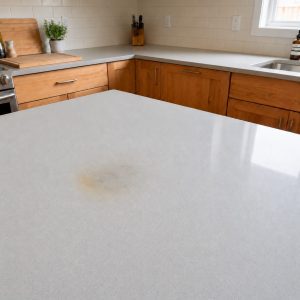
If replacement is needed, our team can suggest a more heat-tolerant material. Never attempt a do-it-yourself heat repair on quartz without professional advice; harsh chemicals and sanding may make the mark worse. See 7 Everyday Habits That Quietly Ruin Your Countertops for more prevention tips.
Frequently Asked Questions
Can quartz countertops crack from heat?
Yes, though discoloration is more common. Intense localized heat or abrupt temperature changes can contribute to cracking. Use a trivet, particularly near cutouts.
Is granite completely heatproof?
No. Granite tolerates heat well, but thermal shock can cause damage around fissures or weakened areas. Continue using trivets.
Can I put a slow cooker or air fryer on quartz?
Use an approved heat-resistant mat or trivet. These appliances release sustained heat through bases or vents. Follow appliance clearances and both manufacturers’ instructions.
Find a Countertop That Fits How You Cook
Cooking habits matter as much as appearance. Surface finish affects how a countertop looks and cleans, too; explore honed, polished and leathered finishes while comparing options. Visit the Chicago Countertop Co. showroom in Bensenville to compare slabs and discuss care.
Serving Chicago and the surrounding 150-mile area, we offer a free online estimate. Call 773-632-1600.