

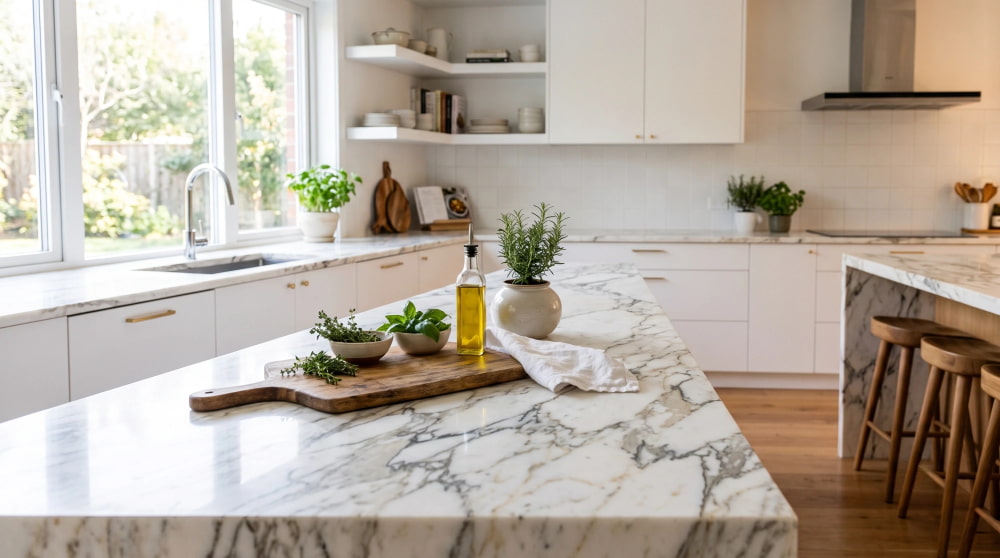
Choosing a countertop feels overwhelming for one simple reason: everyone starts with the wrong question. They ask “which material is best?” — and the honest answer is that there is no best material. There’s only the best material for how you live, what you can spend, and what you’re willing to maintain.
This guide walks you through the decision the way we walk customers through it in our Chicago showroom: four questions, in order. Answer them honestly and the right material usually picks itself.
First, Meet the Contenders
Before the questions, a 30-second introduction to the four materials that cover the vast majority of kitchens:
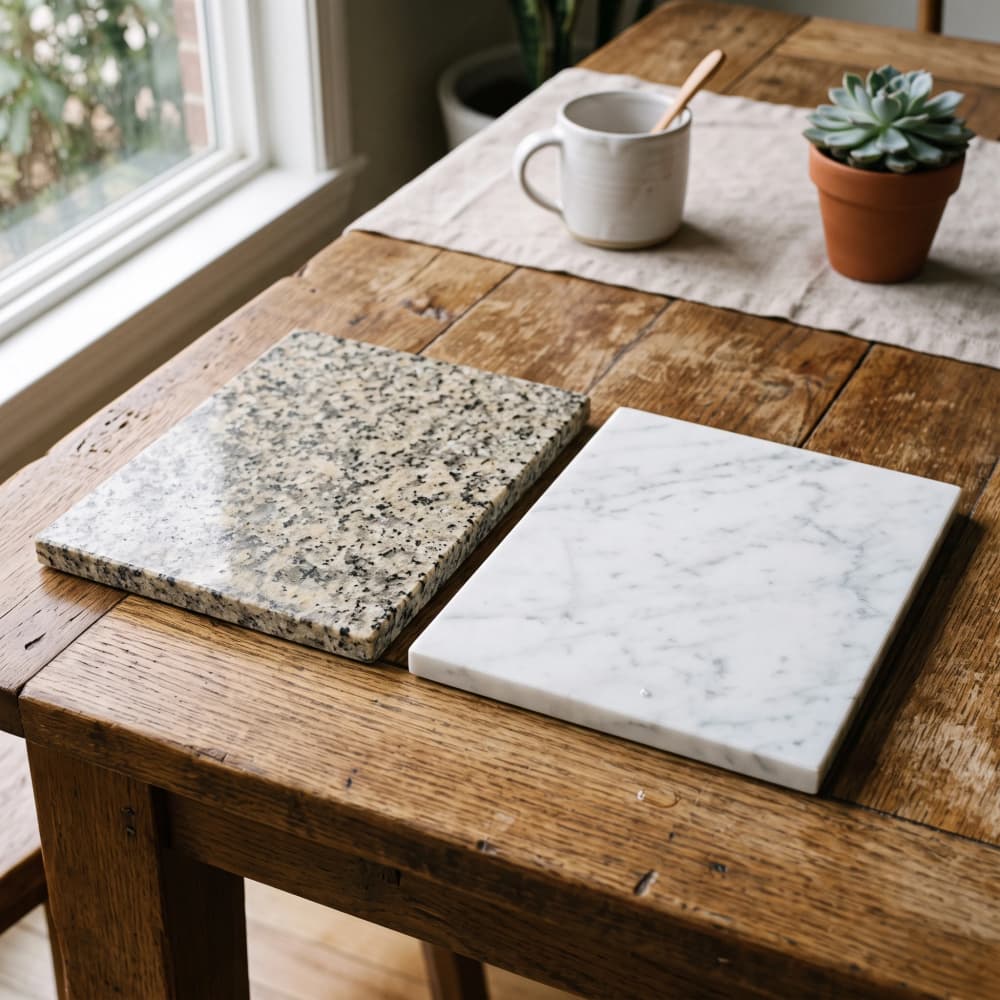
Granite — 100% natural stone. Extremely durable, heat-resistant, every slab unique. Needs periodic sealing.
Quartz — engineered stone (ground natural quartz + resin). Non-porous, essentially zero maintenance, consistent patterns. Not a fan of high heat.
Quartzite — natural stone that looks like marble but is harder than granite. The luxury favorite. Needs sealing, costs the most.
Marble — the timeless classic. Unmatched elegance, but soft and reactive: it can scratch and etch. Rewards owners who accept a lived-in patina. (We wrote an honest breakdown of what marble really demands.)
There are others — porcelain, soapstone, butcher block — but master these four and you understand 90% of the market.
Question 1: What’s Your Real Budget?
Installed prices in the Chicago area break down roughly like this:
| Material | Installed price/sq ft |
|---|---|
| Granite | $50–$120 |
| Quartz | $60–$150 |
| Marble | $60–$150+ |
| Quartzite | $90–$210 |
Two things matter more than the table itself. First, think in total project cost, not per-square-foot price — a typical 40–50 sq ft kitchen runs anywhere from about $2,500 (entry granite) to $9,500+ (premium quartzite). Second, the ranges overlap heavily: an exotic granite can cost more than a basic quartzite. The material sets the neighborhood; the specific slab sets the price.
If budget is your deciding factor, granite and entry-level quartz give you the most surface per dollar. If budget is flexible, keep reading — the next two questions matter more.
Question 2: How Do You Actually Use Your Kitchen?
Be honest here, because this is where most countertop regrets are born.
You cook daily, kids do homework on the island, hot pans land wherever there’s space → durability is everything. Granite and quartzite shrug off this life. Quartz handles it too, with one rule: use trivets, because its resin can scorch.
You cook occasionally and entertain often → almost anything works, so let looks lead. This is where marble and dramatic quartzite earn their keep.
You’re renovating to sell → quartz is the safe crowd-pleaser buyers recognize, and a statement island in quartzite is the single upgrade that photographs best. (More on that in our kitchen island guide.)
It’s for a bathroom, not a kitchen → the rules relax. No hot pans, no lemon juice — even marble thrives here.
Question 3: How Much Maintenance Will You Really Do?
Not “could you” — will you.
Zero. I want to wipe and walk away → quartz. It’s non-porous, never needs sealing, and resists stains out of the box. This is why it now outsells every other material in America.
A little ritual once a year is fine → granite or quartzite. Sealing is a 20-minute DIY job — spray, wait, wipe — but it does need to actually happen.
I’ll trade some care for beauty → marble is on the table. Sealing plus prompt wiping plus acceptance that acids (lemon, wine, tomato) will leave marks over time.
A common misconception worth killing: sealed natural stone is not high-maintenance. Day to day, granite and quartzite need nothing more than soap and water — the difference from quartz is one annual ritual, not a lifestyle.
Question 4: What Do You Want to See Every Morning?
Last question, and the most personal.
Consistent, controlled, modern → quartz. What you see in the sample is what arrives in your kitchen — including very convincing marble looks with none of marble’s demands.
Natural, one-of-a-kind, organic → granite or quartzite. No two slabs on earth match. Granite tends toward speckle and movement; quartzite toward flowing, marble-like veining.
The real thing, history and all → marble. Nothing else has its depth and cool touch, and no lookalike fully captures it.
Putting It Together: Quick Profiles
- Busy family, wants easy: quartz perimeter — done.
- Serious home cook: granite or quartzite; heat and knives are daily guests.
- Design-first remodel: quartzite island as the star, quieter perimeter to support it.
- Marble dream, marble fear: quartzite (natural) or marble-look quartz (zero maintenance) — this exact dilemma is half our showroom conversations.
- Rental or flip: entry quartz or granite; durable, neutral, buyer-friendly.
The Step Nobody Should Skip: See the Slab
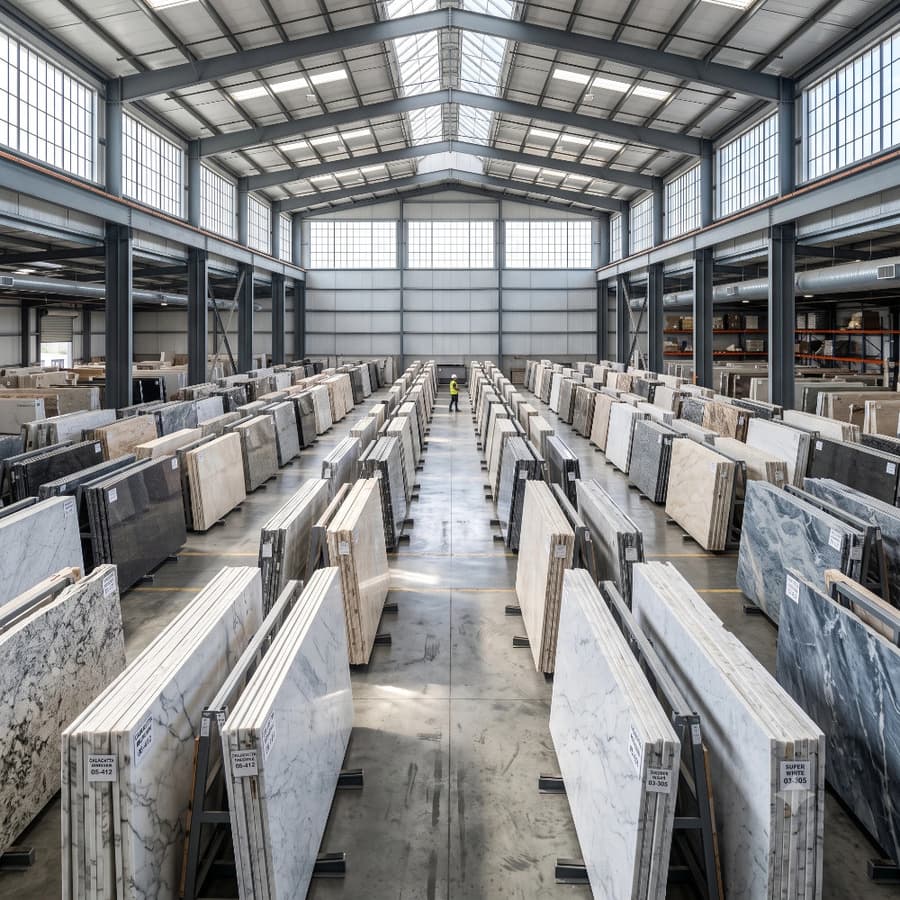
Samples can be misleading. A 4-inch square cannot show you how veining moves across a 10-foot island, and with natural stone, the slab you pick is the design. Whatever direction the four questions point you, the final call should happen standing in front of full slabs.
Visit our Chicago showroom to compare your shortlist side by side. Bring your cabinet color, rough measurements, and any questions you have — our team does this every day, with no sales pressure and helpful guidance at every step.
Call (+1) 773-632-1600 or make an appointment — we’ll help you turn four answers into one confident choice.
2 Responses
[…] your slab, then choose a backsplash that complements it. If you are still deciding on material, our beginner’s guide to choosing a countertop material is the place to […]
[…] you are still comparing the basic differences between these materials, our beginner’s guide to countertop materials is a useful place to […]