

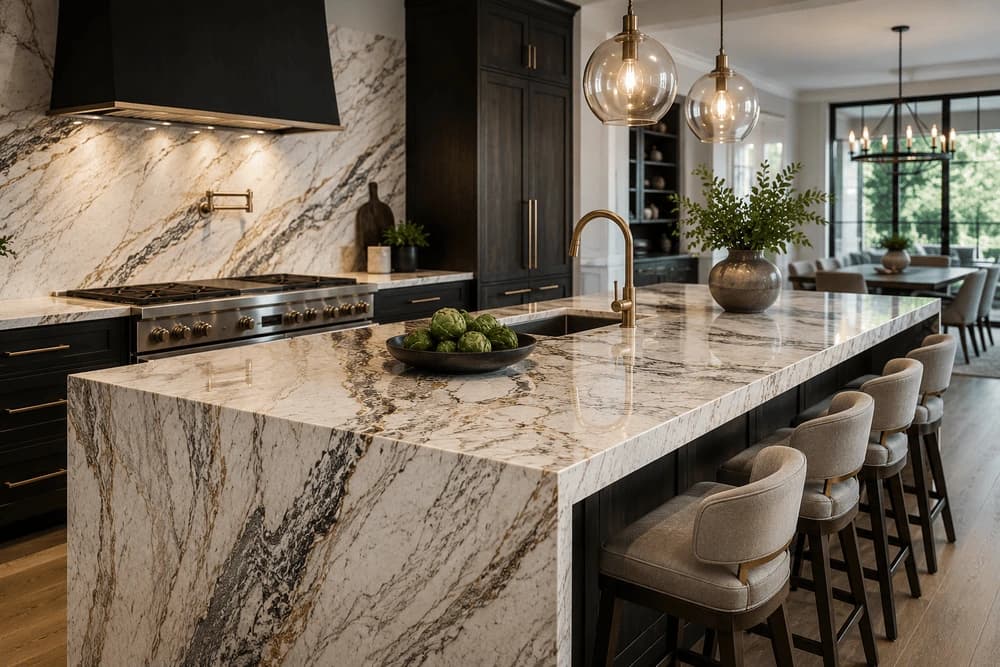
The kitchen island has evolved far beyond its humble origins as a prep surface. Today, it’s the architectural centerpiece of the modern home — the place where families gather, guests linger, and meals come to life. And nothing elevates an island quite like the right natural stone countertop.
But with so many materials available — granite, quartzite, marble, and engineered quartz — how do you choose the one that transforms your island from functional to unforgettable? This guide walks you through everything you need to know.
Why the Island Deserves Special Attention
Unlike perimeter countertops that are anchored against walls, the kitchen island floats in space. It’s visible from every angle — from the kitchen, the dining area, and often the living room. This 360-degree exposure means that the material, color, and veining of your countertop become a design statement that defines the entire open-plan floor.
That’s why island countertops are often chosen differently from the rest of the kitchen. Homeowners and designers frequently opt for a contrasting or bolder slab on the island, creating a focal point that draws the eye and anchors the room.
The Four Natural Stone Contenders
1. Granite: Bold, Earthy, and Virtually Indestructible
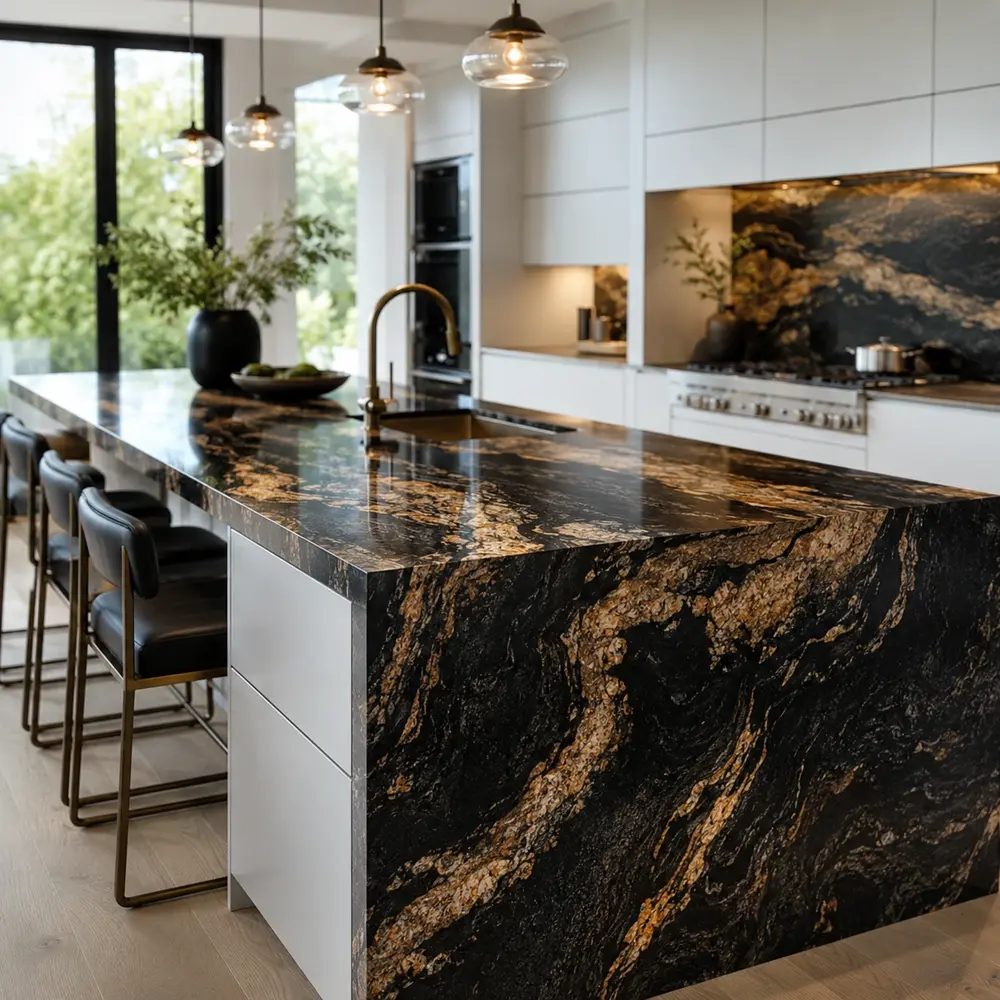
Granite is one of the most durable natural stones on earth, making it an ideal choice for a high-traffic island. Each slab is unique — formed over millions of years — which means no two kitchens will ever look exactly alike.
Best for: Busy households, avid cooks, and anyone who values low-maintenance elegance. Granite handles heat, scratches, and everyday wear with remarkable resilience.
Design tip: For islands, look for dramatic movement slabs — stones with sweeping mineral patterns in deep blacks, warm tawny golds, or cool ocean blues. A book-matched granite island creates a jaw-dropping symmetrical effect.
Maintenance: Seal once a year. Clean with mild soap and water. That’s really all there is to it.
2. Quartzite: The Designer’s Secret Weapon
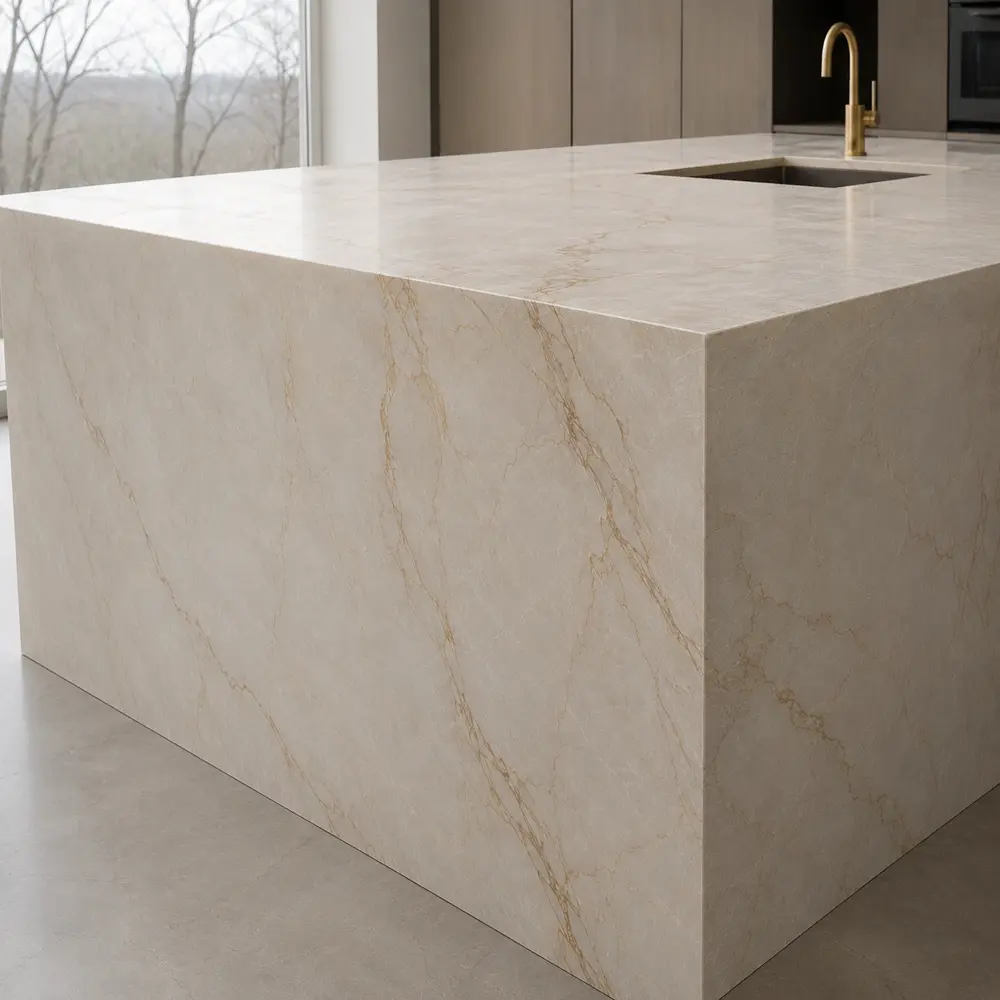
Quartzite is natural stone — formed when sandstone is transformed under intense heat and pressure — and it is frequently confused with quartz (an engineered product). Quartzite is harder than granite and, in the eyes of many designers, the most beautiful stone available today. Its signature look combines the dramatic white-and-gray veining of marble with the hardness and durability of granite.
Best for: Design-forward kitchens where visual impact is the priority. Quartzite performs beautifully in high-end remodels and luxury homes.
Design tip: Pair a white quartzite island (such as Taj Mahal or Sea Pearl) with flat-front cabinetry in navy or deep forest green for a look that never goes out of style.
Maintenance: Quartzite is porous and should be sealed every 6–12 months. Avoid acidic cleaners.
3. Marble: Timeless Luxury with Character That Grows Over Time
Marble has been used in the world’s greatest buildings for centuries — and there’s a reason it never loses its appeal. The luminous, cool-white surface and delicate veining of marble bring a level of sophistication that no other material quite matches.
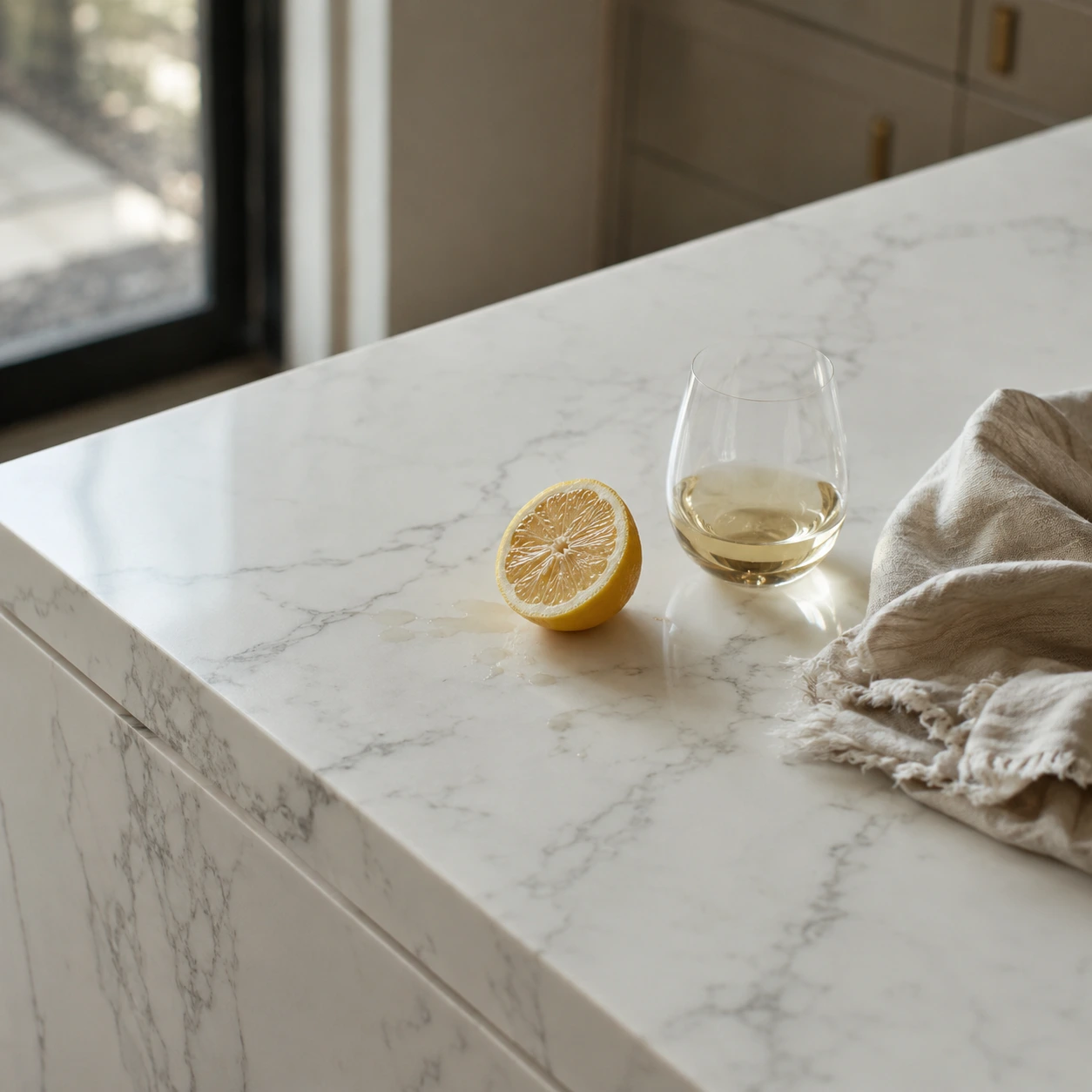
Marble is softer than granite and quartzite, which means it can etch when it comes into contact with acidic substances like lemon juice, wine, or vinegar. Some homeowners see this as a dealbreaker; others embrace it as part of the material’s living, evolving character.
Best for: Kitchens where aesthetics take precedence, or islands that function primarily as serving and entertainment surfaces rather than heavy cooking prep zones.
Design tip: Calacatta and Carrara marble are classics, but consider Nero Marquina (black marble with white veining) for a dramatic, editorial island that becomes an instant conversation piece.
Maintenance: Seal every 3–6 months. Use pH-neutral cleaners. Blot spills immediately.
4. Engineered Quartz: Consistent Beauty, Zero Compromise
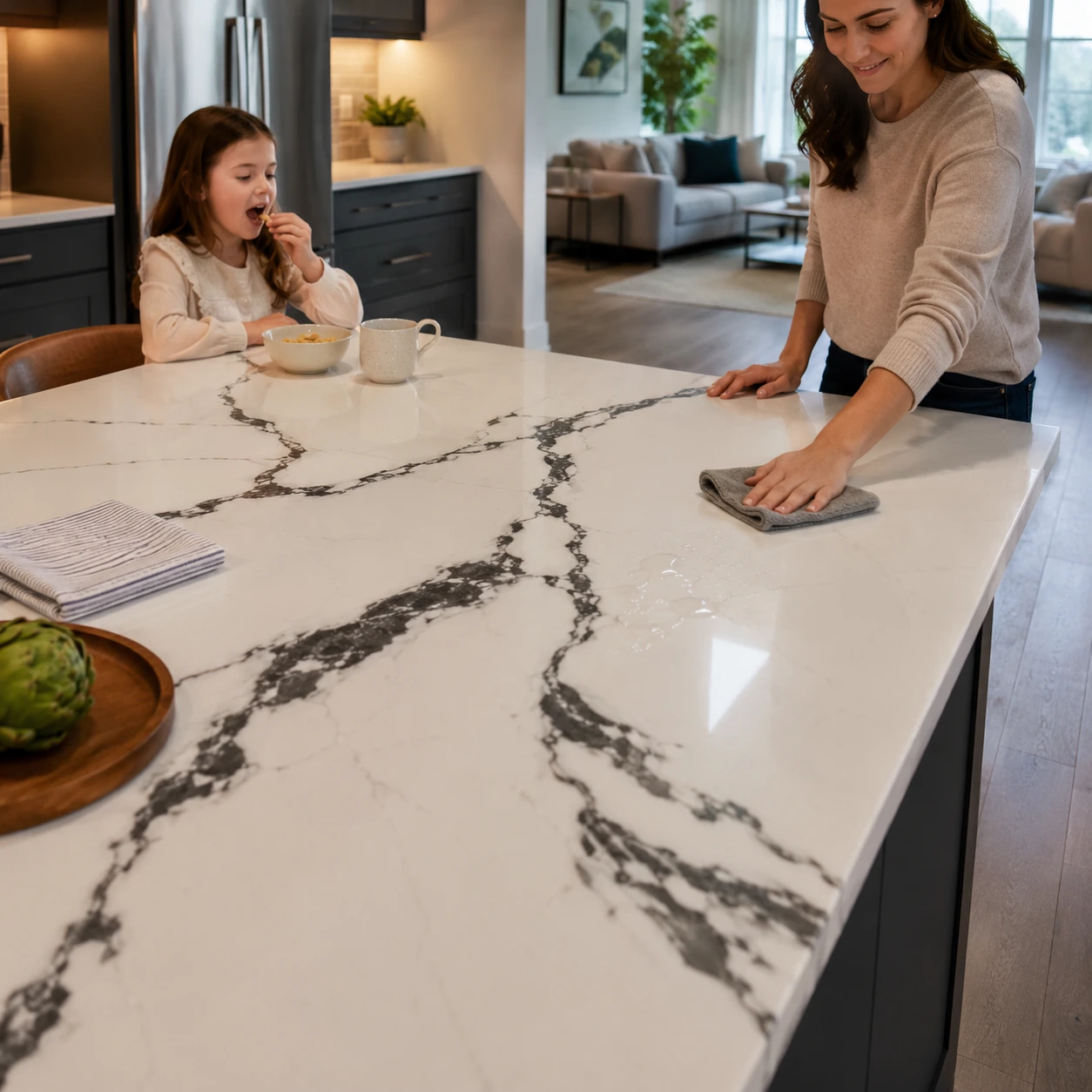
Quartz countertops are manufactured by combining roughly 90% ground natural quartz with resins and pigments. The result is a non-porous, virtually maintenance-free surface that comes in an enormous range of colors and patterns — including convincing marble and granite lookalikes.
Best for: Families, rental properties, and anyone who prioritizes function without sacrificing style.
Design tip: Look for large-format slabs with realistic veining. For islands, consider a bold veined quartz in charcoal or deep forest tones.
Maintenance: Non-porous, so no sealing required. Wipe clean with mild soap. Avoid prolonged direct heat.
Design Strategies That Make Islands Stand Out
Go Waterfall
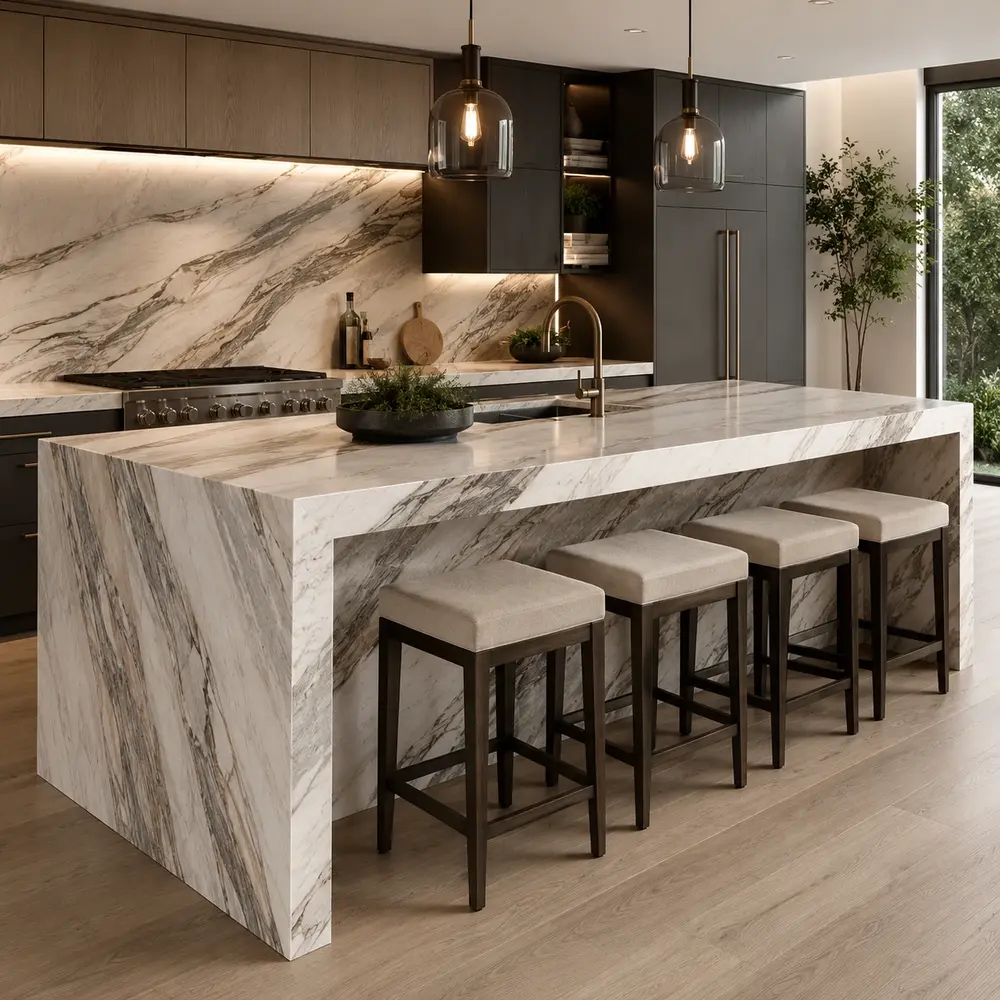
A waterfall edge — where the countertop extends vertically down the sides of the island to the floor — is one of the most dramatic design choices available. It works best with stone that has strong linear veining (quartzite and marble are ideal) and immediately elevates a standard island into a sculptural statement.
For a waterfall island, fabrication matters just as much as the stone itself. The best results come from careful slab layout, matched veining, and mitered edges that allow the stone pattern to “wrap” naturally from the top surface down the sides of the island.
If your island can be cut from a jumbo slab, the main countertop may have no visible seam at all. For larger islands, seam placement becomes especially important. A skilled fabricator will position the seam away from the main sightline and align the veining as cleanly as possible.
Contrast Your Materials
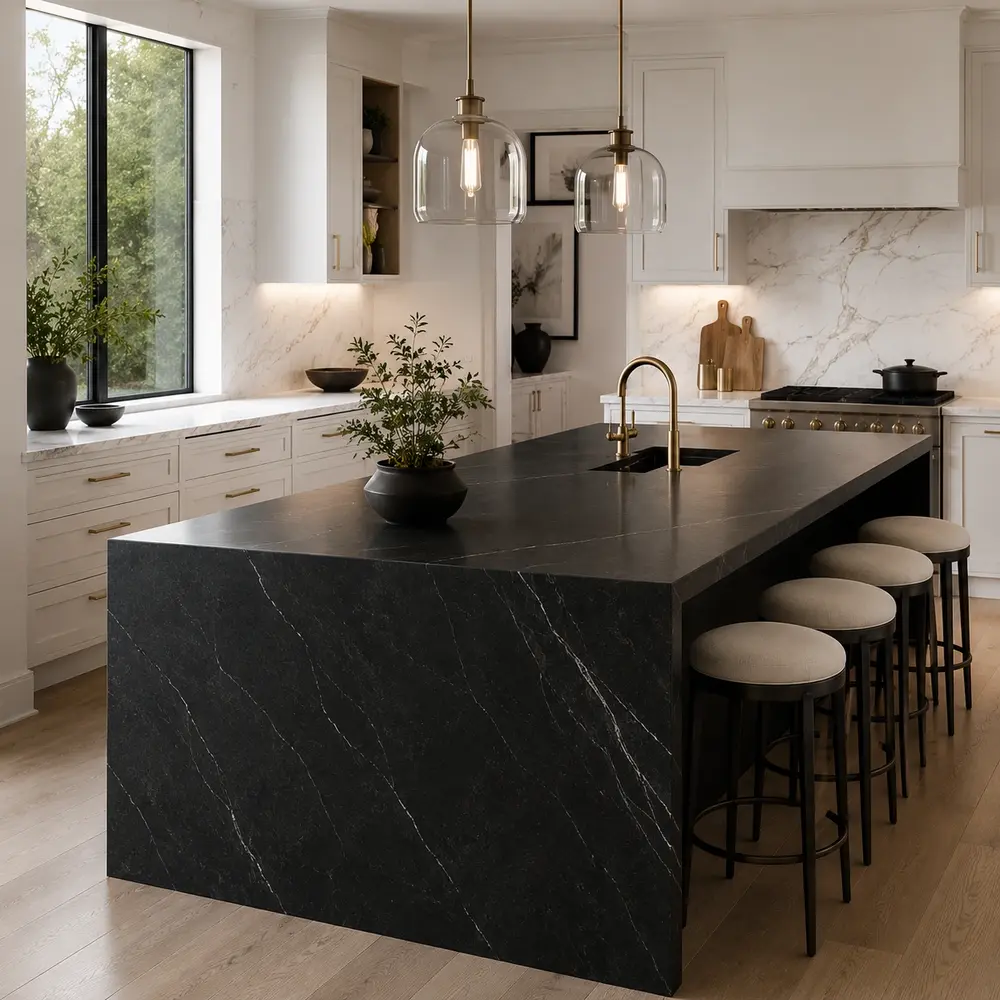
If your perimeter countertops are light, consider a darker island. A white marble perimeter paired with a black granite or soapstone island creates a dynamic, high-contrast kitchen that feels both curated and intentional.
Think About Thickness
Standard countertops are 3/4 inch to 1.25 inches thick. But for islands, a thicker slab — 2 or even 3 inches — adds visual weight and presence. Mitered edges can achieve the look of a thick slab while keeping weight and cost manageable.
Match Your Edge Profile
The edge profile is a subtle but powerful design decision. A sharp, straight eased edge reads modern and minimal. A bullnose edge is softer and more traditional. An ogee edge leans classical and ornate. Choose an edge that reinforces your kitchen’s overall design language.
Sizing Your Island Countertop Right
A common mistake is underestimating island size. Interior designers generally recommend:
- Minimum 42 inches of clearance on all sides of the island for comfortable movement
- At least 36–42 inches of island width to allow for seating on one side and prep space on the other
- Overhang of 12–15 inches for comfortable seating at bar height (36 inches) or counter height (34 inches)
At Chicago Countertop Co., our team can help you plan the right dimensions for your space — including custom fabrication to ensure a perfect fit.