

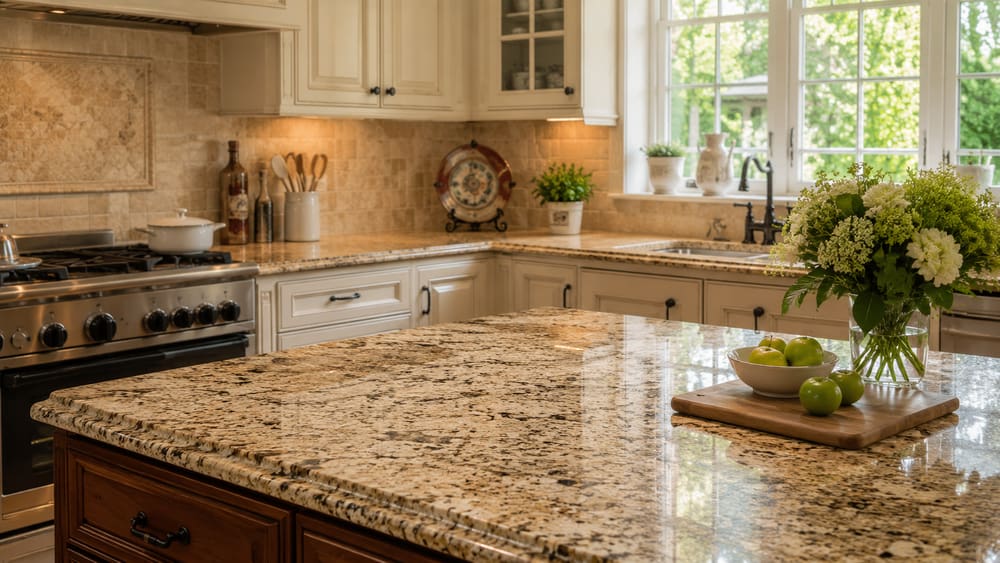
Countertops are one of the biggest line items in any kitchen project, so the question is fair: how long will they actually last? The short answer is encouraging — stone countertops are among the longest-lived things in your entire house. Installed well and treated reasonably, most will outlast your cabinets, your appliances, and quite possibly your mortgage.
But “stone lasts forever” hides real differences between materials. Here’s what to actually expect from each, what shortens a countertop’s life, and when replacement genuinely makes sense.
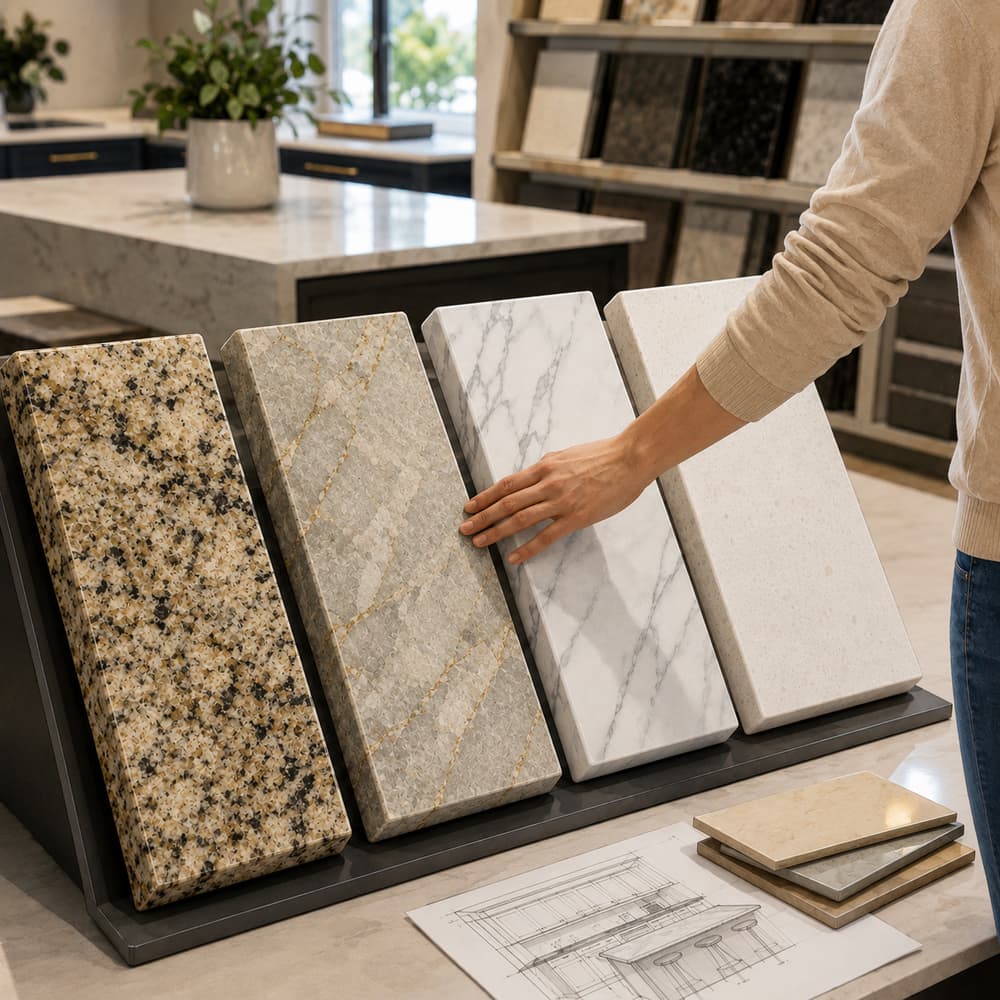
Lifespan at a Glance
- Granite: 50+ years — often described as a lifetime surface
- Quartzite: 50+ years — same league as granite, arguably tougher
- Marble: 50+ years structurally — but expect visible aging (patina) much sooner
- Quartz: 20–30 years — excellent, but resin gives it a practical ceiling
- Laminate (for comparison): 10–15 years
Two patterns jump out. First, natural stone essentially doesn’t wear out — when granite counters get replaced, it’s almost always for style reasons, not failure. Second, quartz’s number isn’t a defect; 20–30 low-maintenance years is a great run. It’s just physics: natural stone is rock through and through, while quartz is roughly 90% stone bound with polymer resin, and resin ages — it can yellow slightly with UV exposure and is more sensitive to heat over decades of use.
What These Numbers Really Mean
Granite and quartzite: the “forever” tier. These are metamorphic and igneous rocks that spent millions of years becoming what they are; your kitchen won’t wear them down. Their realistic risks are events, not age — a cracked slab from a house settling issue, a chipped corner from a dropped cast-iron pan. Even those are usually repairable. The one genuine requirement is periodic sealing; more on that below.
Marble: forever, but honestly. Structurally, marble lasts generations — Europe is full of centuries-old marble surfaces. What changes is the finish: etching from acids, fine scratches, softened polish. Some owners love this lived-in patina; others can’t stand it. Marble’s lifespan question is really a temperament question, which we covered in our honest marble guide.
Quartz: long, easy, but not eternal. For the first two decades, quartz may look newer than anything else in this list — non-porous, stain-proof, zero maintenance. The aging shows up later and gradually: possible slight yellowing near sunny windows, resin fatigue around seams and cutouts, scorch marks if trivets were skipped. None of this is failure at year five; it’s the reason quartz carries a number while granite carries a shrug.
What Actually Shortens a Countertop’s Life
Age rarely kills a countertop. These do:
Skipped sealing (natural stone). An unsealed granite or quartzite top absorbs oils and stains that become permanent residents. The fix costs 20 minutes a year. Neglecting it is the single most common way owners “age” a stone counter prematurely.
Direct heat (quartz). One hot pan can leave a permanent scorch ring on quartz. Trivets aren’t a suggestion; they’re the warranty condition.
Cutting directly on the surface. Quartzite will win against your knife, but why make them fight? Granite and quartz can develop fine scratches, and marble certainly will.
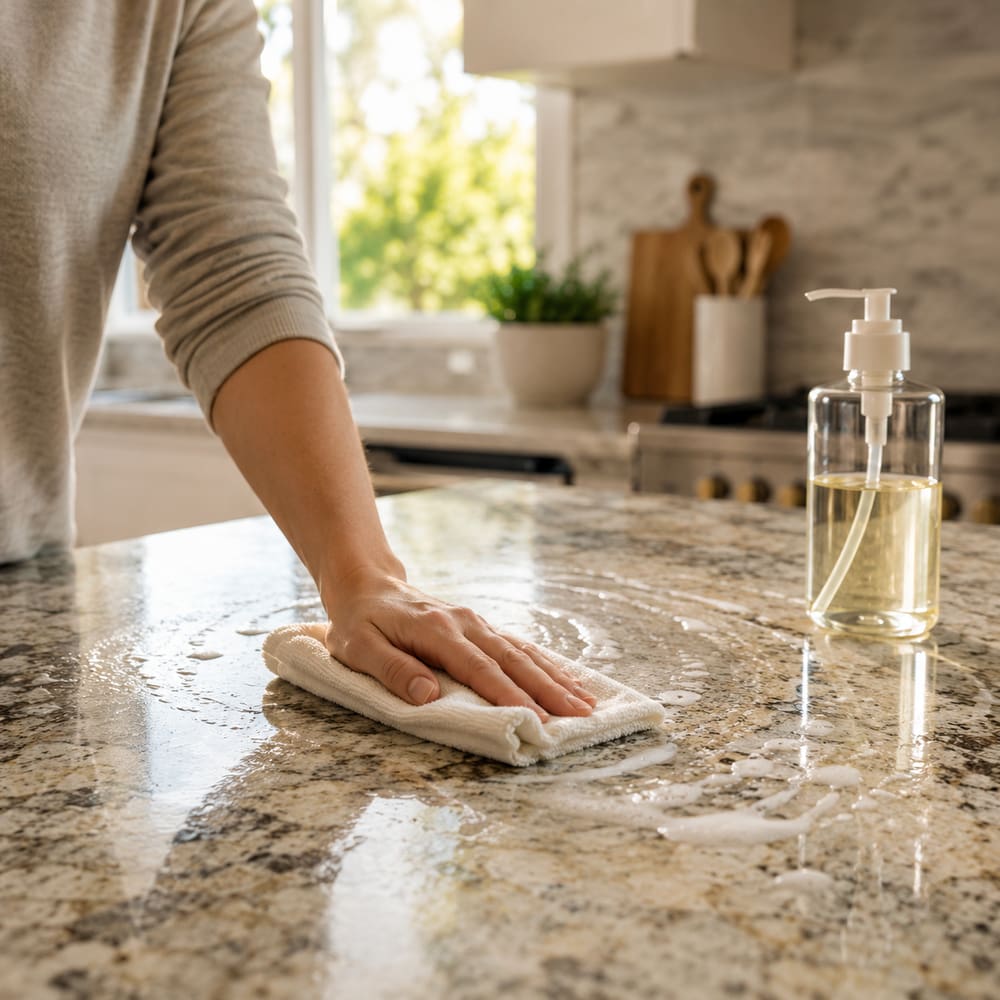
Harsh cleaners. Bleach, vinegar, and abrasive powders degrade sealers on natural stone and can dull quartz resin. Soap and water handles 99% of daily cleaning on every material.
Bad installation. Improper support spans, missing seam adhesive, uneven cabinets — most “my countertop cracked” stories trace back to installation day, not the stone. It’s the strongest argument for professional templating and installation.
When Replacement Actually Makes Sense
In practice, countertops get replaced for three reasons — and only one of them is damage:
- Style. The 1990s speckled granite works fine; it just dates the kitchen. This drives the vast majority of replacements.
- Remodel logistics. New layout, new cabinets — the old tops rarely fit the new plan.
- Real damage. Large cracks through cutouts, deep staining on neglected stone, delaminating seams. Even here, ask a fabricator about repair first — many “replace it” verdicts are actually fixable for a fraction of the cost.
If you’re replacing for style, there’s a silver lining: you’re choosing with better options than existed a decade ago. Our guide to choosing a countertop material walks through the decision from scratch.
Making Whatever You Choose Last Longer
The boring secrets, all cheap:
- Seal natural stone on schedule (once a year is the safe default; a water-drop test tells you when it’s actually due)
- Use trivets on quartz, always — and on natural stone too, out of good habit
- Wipe spills promptly, especially oils and wine on natural stone
- Clean with pH-neutral soap, skip the harsh stuff
- Use cutting boards — for the knives’ sake if nothing else
Do these and the lifespan table above becomes conservative: plenty of granite and quartzite tops will simply never need replacing.
FAQ
Which countertop material lasts the longest? Granite and quartzite — both are effectively lifetime surfaces when sealed periodically and installed correctly. Quartzite has a slight edge in hardness.
Do quartz countertops wear out? Not quickly, but yes — the resin component gives quartz a practical lifespan of roughly 20–30 years. UV exposure and heat accelerate aging; trivets and window shading slow it down.
How often do countertops need to be replaced? Stone countertops usually never need replacement for durability reasons. Most replacements are driven by style changes or kitchen remodels, typically on a 15–25 year cycle.
Does sealing really extend a countertop’s life? For granite, quartzite, and marble — yes, meaningfully. Sealing blocks oils and stains from penetrating the stone. It’s a 20-minute annual task that protects a multi-thousand-dollar surface.
Can a cracked countertop be repaired instead of replaced? Often, yes. Chips, small cracks, and seam issues are routinely repaired by fabricators with color-matched epoxy. Get a repair opinion before pricing a replacement.
Built to Outlast the Trends
Here’s the honest summary: if you buy natural stone, plan for it to be the last countertop that kitchen ever needs. If you buy quartz, plan for two easy decades and a refresh when the style itself feels due.
Either way, the biggest lifespan decision isn’t the material — it’s the fabrication and installation behind it. Browse our live inventory, then visit our Chicago showroom to talk through options with a team that installs these materials every day.
Call (+1) 773-632-1600 or make an appointment — let’s find a countertop you’ll never have to think about again.
2 Responses
[…] For expected lifespans by material, see how long countertops last. […]
[…] If you are wondering when to replace kitchen countertops, look at the condition of the surface, the cabinets below it, and how well the countertop still fits your kitchen. Some problems can be repaired. Others are signs that replacement is the more practical next step. For material lifespans, see How Long Do Countertops Last? Lifespan by Material. […]