

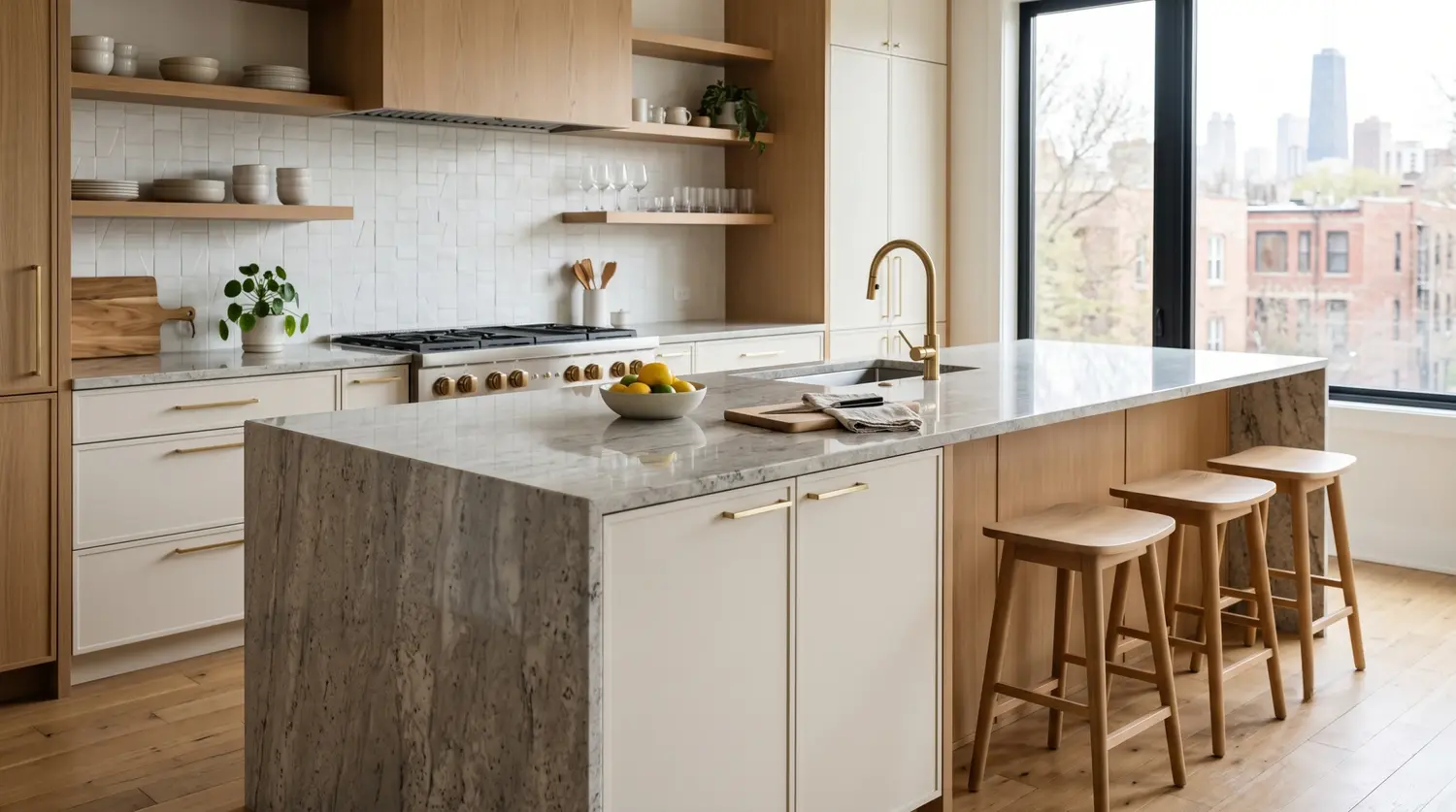
Last month, a client walked into our Bensenville showroom and asked a question we hear regularly:
“Isn’t granite kind of outdated?”
Ten minutes later, she was standing in front of a leathered Bahamas slab, asking whether we had enough material for her kitchen island.
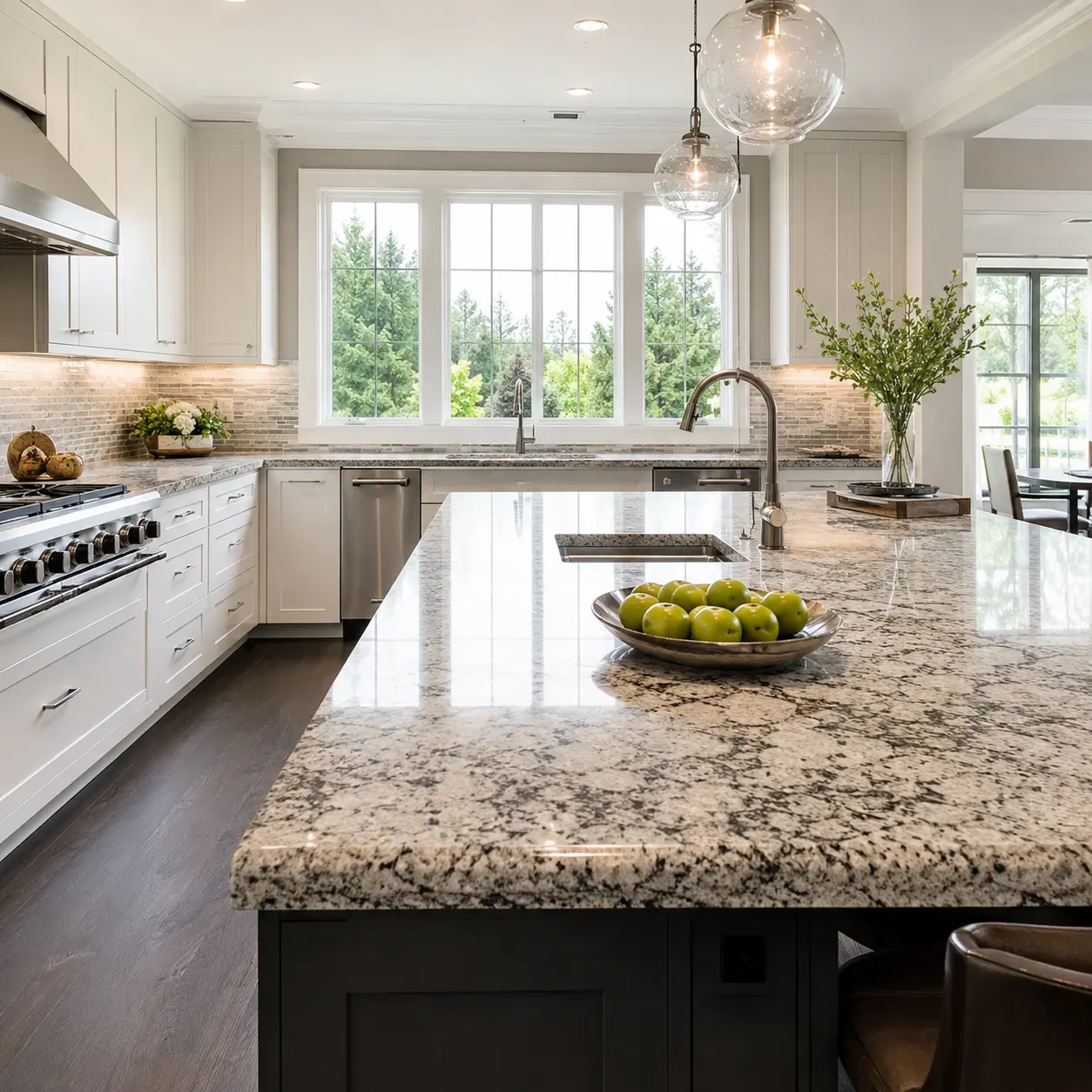
Granite never disappeared. What became dated was a particular look: the heavily speckled brown builder-grade granite used in many kitchens during the late 1990s and 2000s.
Today’s options include light neutrals, leathered finishes, deep blacks, blue-gray minerals, and dramatic natural movement. Granite also remains one of the most accessible ways to bring genuine natural stone into a Chicago home.
This guide explains how to choose granite well, including stone classifications, pricing levels, finishes, sealing, slab selection, seams, and installation. For a detailed look at pricing, labor, edge profiles, and potential extra charges, see our granite countertop cost guide.
Is Granite Outdated?
Granite itself is not outdated, but some granite styles are strongly associated with a particular period.
Brown, gold, and heavily speckled slabs were installed in large numbers throughout the 2000s. Because those colors and patterns appeared in so many similar kitchens, they can now make a space feel dated.
Current granite projects often use:
- Light white-gray stones
- Low-contrast neutral patterns
- Leathered or honed finishes
- Deep black granite
- Blue-gray mineral movement
- Dramatic slabs with flowing patterns
The final look also depends on the cabinetry, backsplash, edge profile, lighting, and overall kitchen design. A carefully selected slab can feel natural and current without resembling the builder-grade kitchens of the past.
What Is Granite?
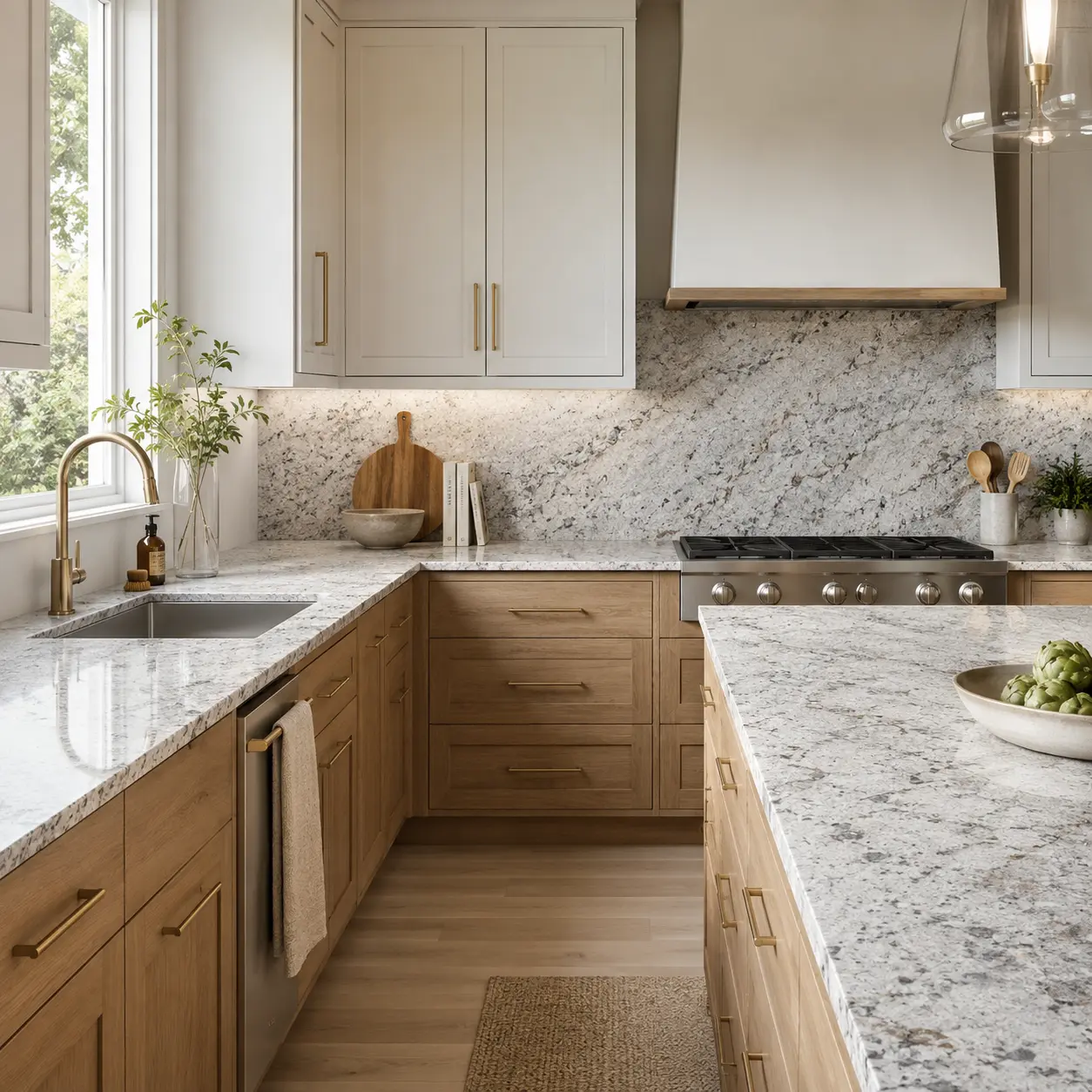
Granite is an igneous rock formed when molten material cools slowly beneath the earth’s surface.
As it cools, minerals such as quartz, feldspar, mica, and amphibole crystallize and lock together. The visible pattern is not printed or manufactured. It is part of the stone’s natural mineral structure.
This mineral structure gives granite high heat and scratch resistance, dimensional stability, and natural variation. Even slabs cut from the same block will not be completely identical.
That variation is one of granite’s greatest strengths. It is also why choosing the actual slab matters.
Why Some Stones Sold as Granite Are Technically Different
In the stone industry, “granite” is also a commercial category for several durable natural stones used as countertops.
Many black stones are technically gabbro, basalt, or norite. Some slabs with folded movement are gneiss, while blue materials with reflective feldspar may be anorthosite.
The distinction matters because these stones can behave differently. Dense black materials may need little sealing, while light or highly active slabs can be more porous or contain more natural fissures. Ask how the specific slab performs rather than relying on one rule for all granite.
Understanding Granite Levels 1 Through 5
Most granite suppliers organize their inventory into pricing levels or groups.
You may see:
- Level 1 through Level 5
- Group A through Group E
- Standard, Premium, and Exotic
These categories are pricing tiers, not standardized quality grades.
There is no universal organization that decides what qualifies as Level 1, Level 3, or Level 5 granite. Each distributor creates its own system based on inventory cost, rarity, slab size, and market demand.
What Determines the Granite Level?
The main factors are rarity and quarry location, usable material produced from each block, visual movement, slab size, and thickness. Dramatic patterns and unusually large slabs often cost more because they are harder to source and may reduce the number of seams required.
A higher level does not automatically mean better durability, hardness, stain resistance, or longer service life.
A Level 1 granite may perform extremely well in a busy kitchen, while an expensive exotic slab may require more care because of its natural structure.
Use granite levels to understand price. Do not use them as the only measure of quality.
Polished, Honed, or Leathered Granite?
The finish changes how granite looks, feels, and performs in daily use.
Polished Granite
Polished granite has a smooth, reflective surface that deepens color and highlights mineral detail. It is generally less absorbent than matte finishes but may show fingerprints, water spots, and crumbs more easily.
Honed Granite
Honed granite has a smooth, matte appearance. It often feels softer and more contemporary and hides fingerprints more effectively. Because the surface is slightly more open, sealing matters more, particularly with light stones and oily spills.
Leathered Granite
Leathered granite has a textured, low-sheen surface that follows the stone’s natural structure. It adds depth while hiding fingerprints, water spots, and smudges.
The finish is popular for islands, dark countertops, outdoor kitchens, and entertaining areas. Our leathered Bahamas and dual-finish Coffee Brown are common choices for clients who want more texture.
Check the Finish in Realistic Lighting
A slab can look very different under showroom lighting than it will inside a home. Consider the natural and artificial light in the finished room before making a final decision.
Granite Options in Our Current Selection
Inventory changes as slabs are sold and new bundles arrive. Below are a few options we currently carry that clients frequently ask about.
Colonial White
A soft white stone with subtle black speckle movement. It pairs easily with white, wood, gray, navy, and green cabinetry.
Bahamas
A white-toned stone with flowing movement, available polished or leathered. The leathered version works especially well on islands.
Azul Platino
A cool silver-gray stone with a relatively consistent pattern for homeowners who want natural stone without dramatic movement.
Coffee Brown
A deep brown stone that pairs well with warm wood and light cabinetry. Its dual polished-and-leathered finish adds dimension.
Most of our granite slabs are approximately 3 cm thick, with average dimensions typically ranging from roughly 120 to 134 inches by 76 to 79 inches depending on the stone.
Check our live granite inventory before visiting the showroom, then view your shortlisted slabs at full size.
Does Granite Need to Be Sealed?
Granite is porous, but the level of porosity varies significantly from one stone to another.
Dense, dark stones may go a long time without requiring additional sealer. Light-colored or coarse-grained granite may absorb liquids more easily.
Instead of following a fixed annual schedule, perform a simple water test:
- Place approximately one tablespoon of water on the countertop.
- Leave it for around 15 minutes.
- Wipe the area dry.
- Check whether the stone has temporarily darkened.
If the granite darkens, moisture is entering the surface and resealing may be appropriate. If the color remains unchanged, the existing protection is likely still working.
Test near the sink and cooktop first, as high-use areas may lose protection more quickly.
For regular cleaning, use warm water, a soft cloth, and a pH-neutral stone cleaner. Avoid vinegar, bleach, ammonia, and abrasive powders because they may weaken the sealer.
How to Choose the Right Granite Slab
The individual slab has a greater effect on the final result than a small showroom sample.
View the Full Slab
A small sample can show the general color family, but not large areas of movement, changes in background color, natural fissures, mineral clusters, or where a cutout may fall. Always view the complete slab before approving it.
Confirm the Bundle
Granite slabs are grouped into bundles cut from the same stone block.
When a kitchen requires more than one slab, the slabs should ideally come from the same bundle. Sequentially cut slabs may provide a closer pattern match.
Ask for the bundle and slab numbers to be included in the project documentation.
Discuss Seam Placement Early
Most kitchens require at least one seam. Before approving the material, ask where it will be placed and how the surrounding pattern will align. A good seam plan balances slab dimensions, structural requirements, and natural movement.
Fissures Are Normal — Ask Anyway
Almost every granite slab has fissures. They’re natural separations along mineral boundaries, they’ve been there for millions of years, and they don’t affect how the stone performs in your kitchen. A slab without any is the exception, not the standard.
What you’re looking for is different: a line that cuts across the grain rather than following it. Those are rare, and any reputable fabricator will have already pulled that slab before it reached the showroom floor. If you see something you’re unsure about, point at it and ask. You should get a clear answer in about ten seconds.
Ask Whether the Slab Is Resined
Many exotic slabs receive resin during production to fill small voids and strengthen fragile areas. This is standard practice, but it is still useful to know which treatments have been applied.
How Much Do Granite Countertops Cost in Chicago?
Installed granite countertops in the Chicago area generally range from approximately $55 to $175 per square foot.
Many straightforward residential projects fall between $70 and $115 per square foot. For a typical 30–40-square-foot kitchen, homeowners may budget roughly $3,800 to $7,500.
The final price depends on:
- Granite level
- Number of slabs required
- Slab size
- Edge profile
- Sink and cooktop cutouts
- Seam complexity
- Removal of existing countertops
- Building access
- Installation conditions
Building access is particularly important in Chicago.
A high-rise project requiring a reserved freight elevator, loading coordination, and a certificate of insurance may cost more than installing the same material in a suburban single-story home.
For a complete breakdown, read our Chicago granite countertop cost guide.
Is Granite Right for Your Kitchen?
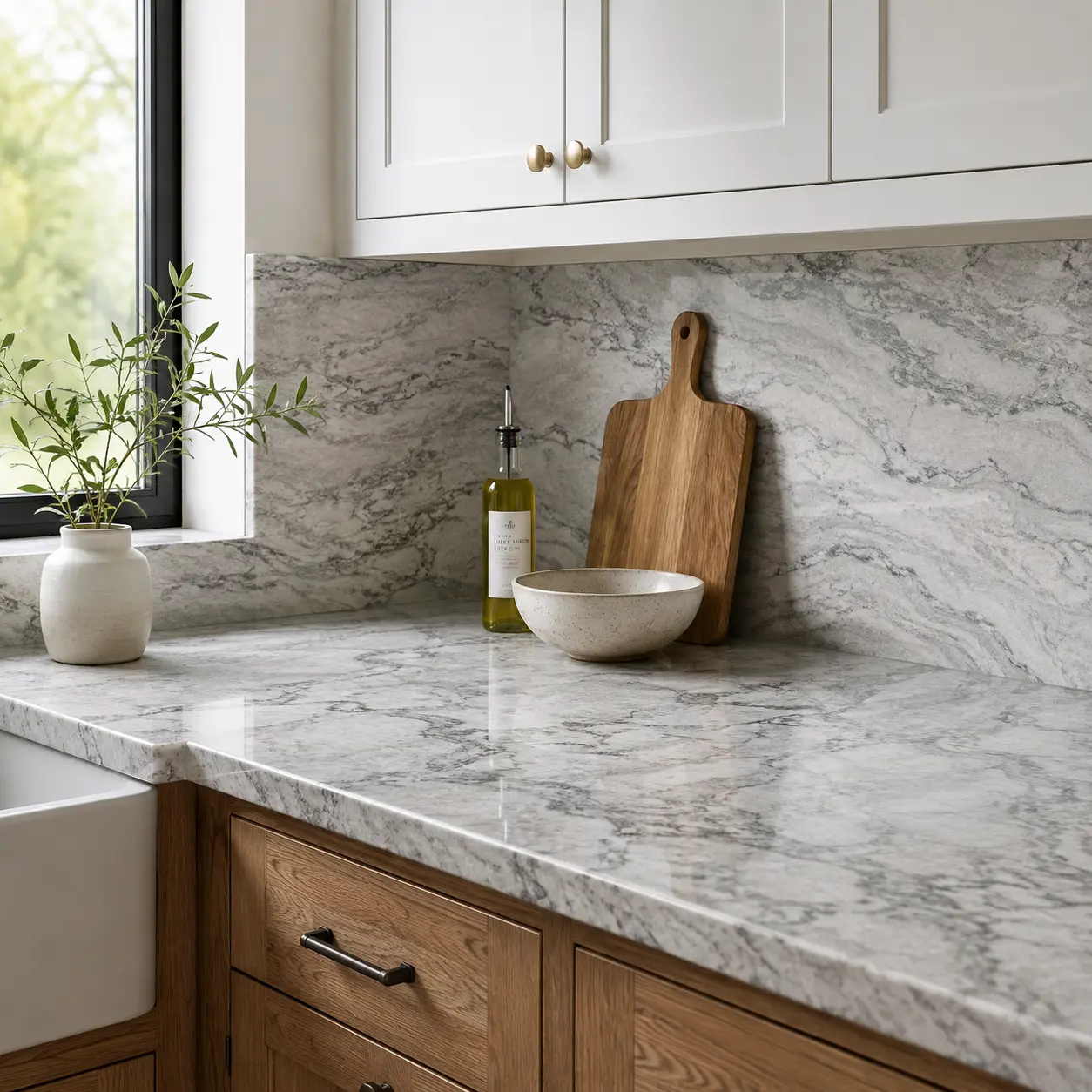
Granite is a strong option for homeowners who want genuine natural stone, high heat resistance, and a wide range of colors without moving into the highest price range of the category.
Granite may be right for you if:
- You want a one-of-a-kind natural surface.
- You are comfortable selecting the exact slab.
- Periodic sealing is not a concern.
- You want strong heat and scratch resistance.
- You are planning an outdoor kitchen or sun-filled room.
Consider another material if:
- You want every slab to match a small sample exactly.
- You prefer a completely non-porous surface.
- You do not want any periodic maintenance.
- You want very uniform patterning throughout the kitchen.
Quartz, porcelain, marble, and quartzite each solve different design and maintenance priorities. Granite is not automatically the best choice for every project, but it remains one of the most versatile natural-stone surfaces.
Granite Countertops FAQ
Is Granite Outdated?
Granite itself is not outdated. Certain brown and heavily speckled builder-grade styles are associated with kitchens from the 2000s, but light stones, dramatic slabs, deep black surfaces, and leathered finishes can look contemporary.
Does Granite Need to Be Sealed Every Year?
Not necessarily. Sealing frequency depends on the density and porosity of the individual stone. A water test is more useful than following a fixed calendar.
Can You Put Hot Pans on Granite?
Granite is highly heat-resistant and can generally tolerate hot cookware. However, using a trivet is still recommended to protect the sealer, resin-treated areas, seams, and surrounding materials.
Does Granite Stain?
Granite can absorb oil, wine, and other liquids when it is unsealed or a spill remains for an extended period. Properly sealed granite resists staining well.
Is Granite or Quartz Better?
Granite is natural, unique, and highly heat-resistant. Quartz is non-porous, does not require sealing, and offers more predictable consistency. The better option depends on your priorities.
What Does Level 3 Granite Mean?
Level 3 means the supplier has placed the stone in its third pricing tier. It usually reflects rarity, import cost, slab yield, and appearance—not a standardized measure of quality.
How Long Does a Granite Project Take?
Many Chicago granite projects take approximately one to three weeks from the template appointment to installation. The schedule may vary depending on slab availability, fabrication complexity, access, and final approvals.
Visit Our Bensenville Granite Showroom
Granite is difficult to evaluate through a screen.
Photos can flatten crystal depth, alter color, and hide the scale of a slab’s movement. They also cannot show where a dramatic vein or mineral cluster will fall across a large island or countertop run.
Start by browsing our granite inventory and shortlisting several options. Then visit our Bensenville showroom to see the slabs at full size.
We can help you compare finishes, review bundle numbers, plan seam locations, determine whether your kitchen requires one or two slabs, and understand whether moving to a higher granite level is worthwhile.
Call (773) 632-1600 or make an appointment.
Bring your kitchen layout and measurements. Leave with a granite slab you have actually seen, touched, and evaluated before committing to the project.
2 Responses
[…] stark white backsplash can make the granite’s orange or golden tones appear stronger. See our granite buyer’s guide for more on reading granite’s […]
[…] cloudy patches, heavily filled areas or visible repair lines, and ask how the slab was treated. Our granite countertops buyer’s guide covers this in more […]