

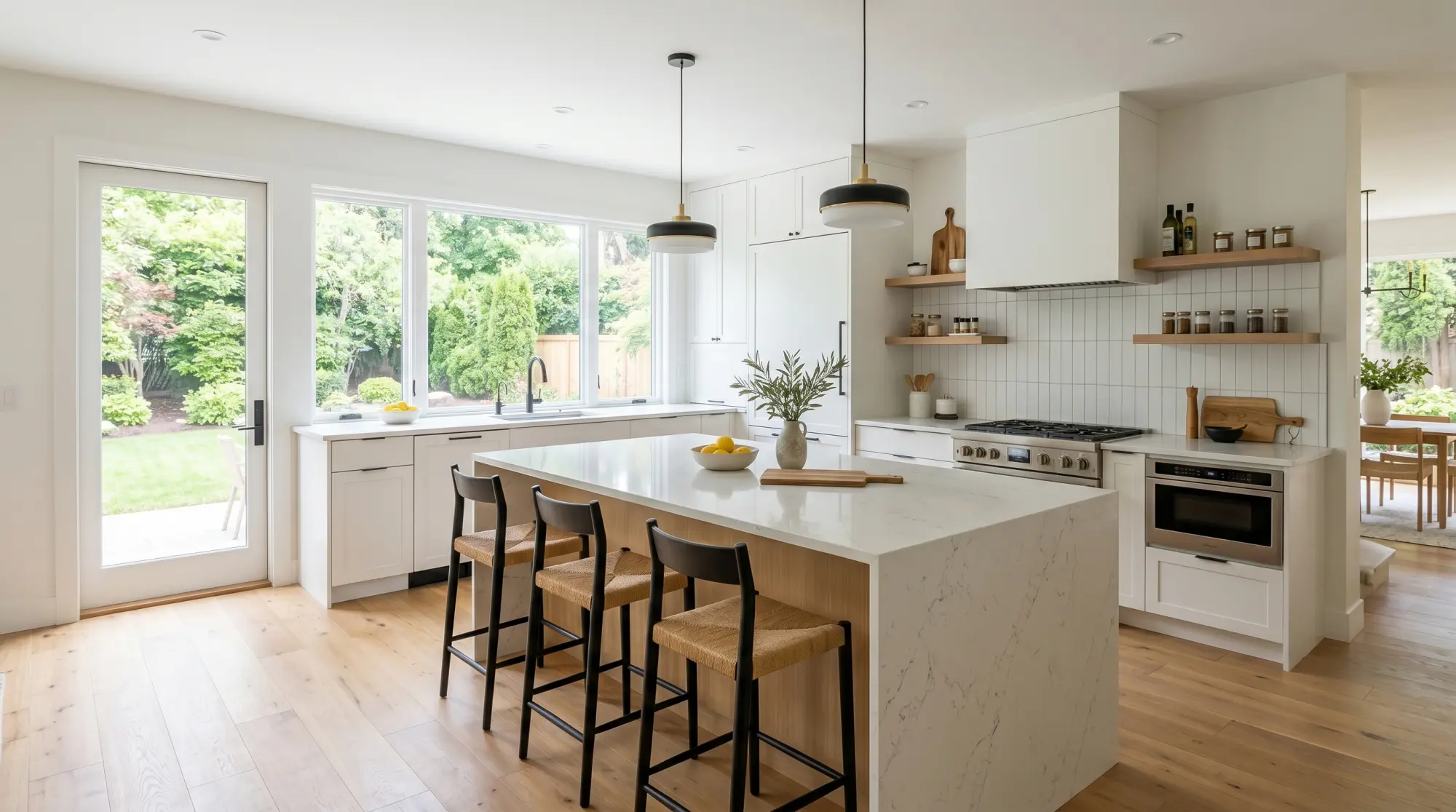
Choosing a countertop is one of the most important decisions in a kitchen project. The surface you select will influence how the space looks, how it functions, and how well it holds up over time. Many homeowners begin by focusing only on color or price, but the overall kitchen design plays a much bigger role in determining which material works best.
A countertop should complement the layout, cabinet style, lighting, and daily use patterns of the kitchen. When these elements work together, the result feels balanced and practical rather than forced.
Below are several key aspects to consider when selecting the right countertop for your kitchen design.
Start with the Overall Kitchen Style
Every kitchen has a visual direction. Some spaces lean toward modern simplicity, while others feel more traditional or transitional. The countertop should reinforce that design instead of competing with it.
For example:
- Modern kitchens often work well with quartz surfaces that have subtle veining or solid colors.
- Classic kitchens frequently pair well with natural stones such as granite or marble.
- Transitional kitchens can combine materials with moderate patterning and neutral tones.
The goal is not simply to match colors but to create harmony between the countertop and surrounding elements such as cabinetry, backsplash, and flooring.
Consider the Kitchen Layout
The layout of the kitchen influences how noticeable and important the countertop surface becomes.
Some kitchens feature long continuous counters, while others include islands or peninsulas that draw attention to the stone. In these cases, the countertop often becomes the visual focal point of the room.
Common kitchen layouts include:
- L-shaped kitchens
- U-shaped kitchens
- Island kitchens
- Galley kitchens
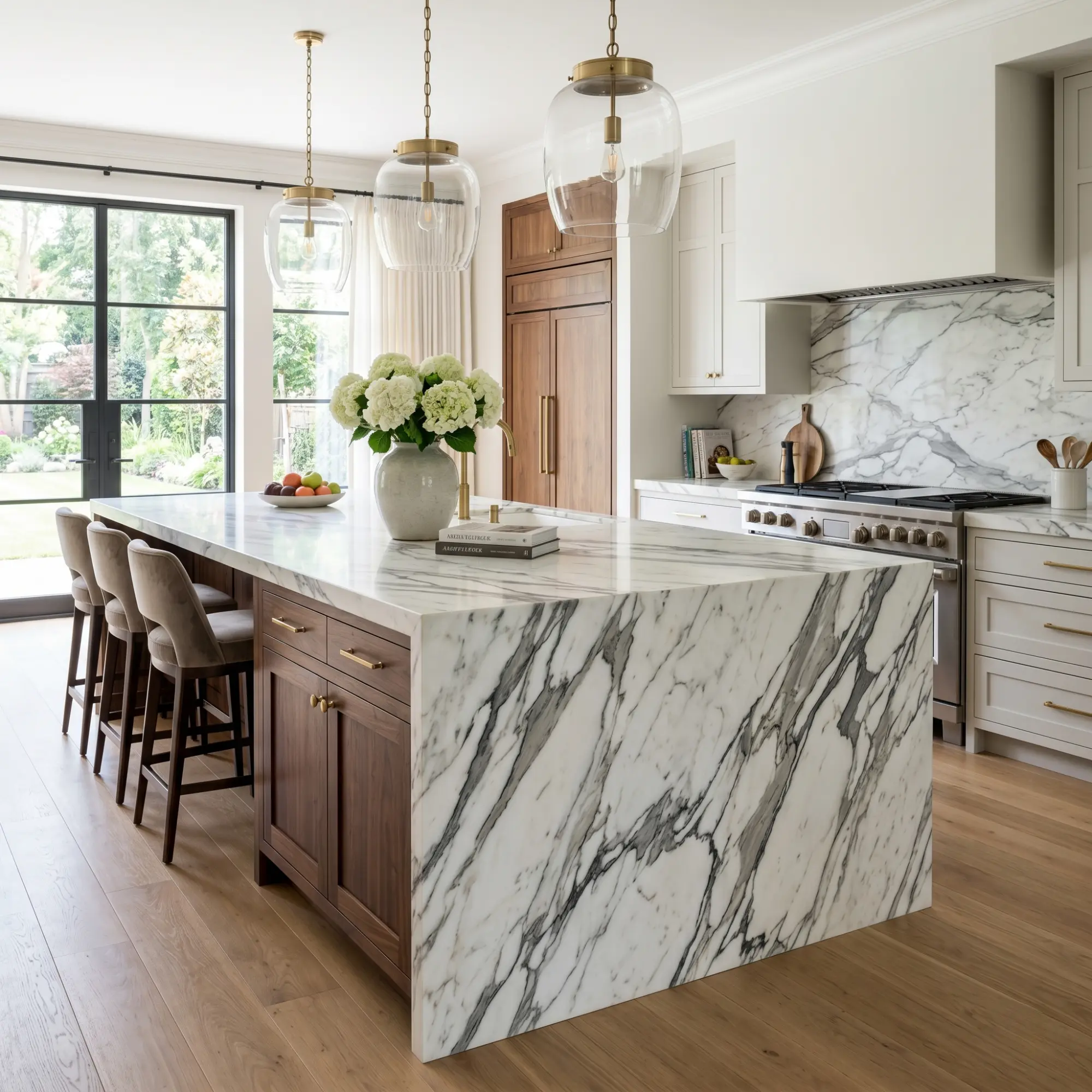
In an island kitchen, for example, the island slab can become the centerpiece of the space. Homeowners sometimes choose a more expressive stone for the island while keeping the perimeter counters simpler.
Balance Color with Cabinets and Backsplash
Color coordination is another important factor when choosing a countertop.
A common mistake is selecting materials independently without considering how they interact visually. Countertops occupy a large surface area, so their tone affects the entire room.
Here are a few general guidelines:
- Light countertops can brighten kitchens with dark cabinetry.
- Dark countertops often create contrast in kitchens with white or light cabinets.
- Neutral tones tend to remain versatile if future design changes are planned.
Instead of focusing on color alone, it is helpful to look at samples next to cabinet doors and backsplash materials before making a final decision.
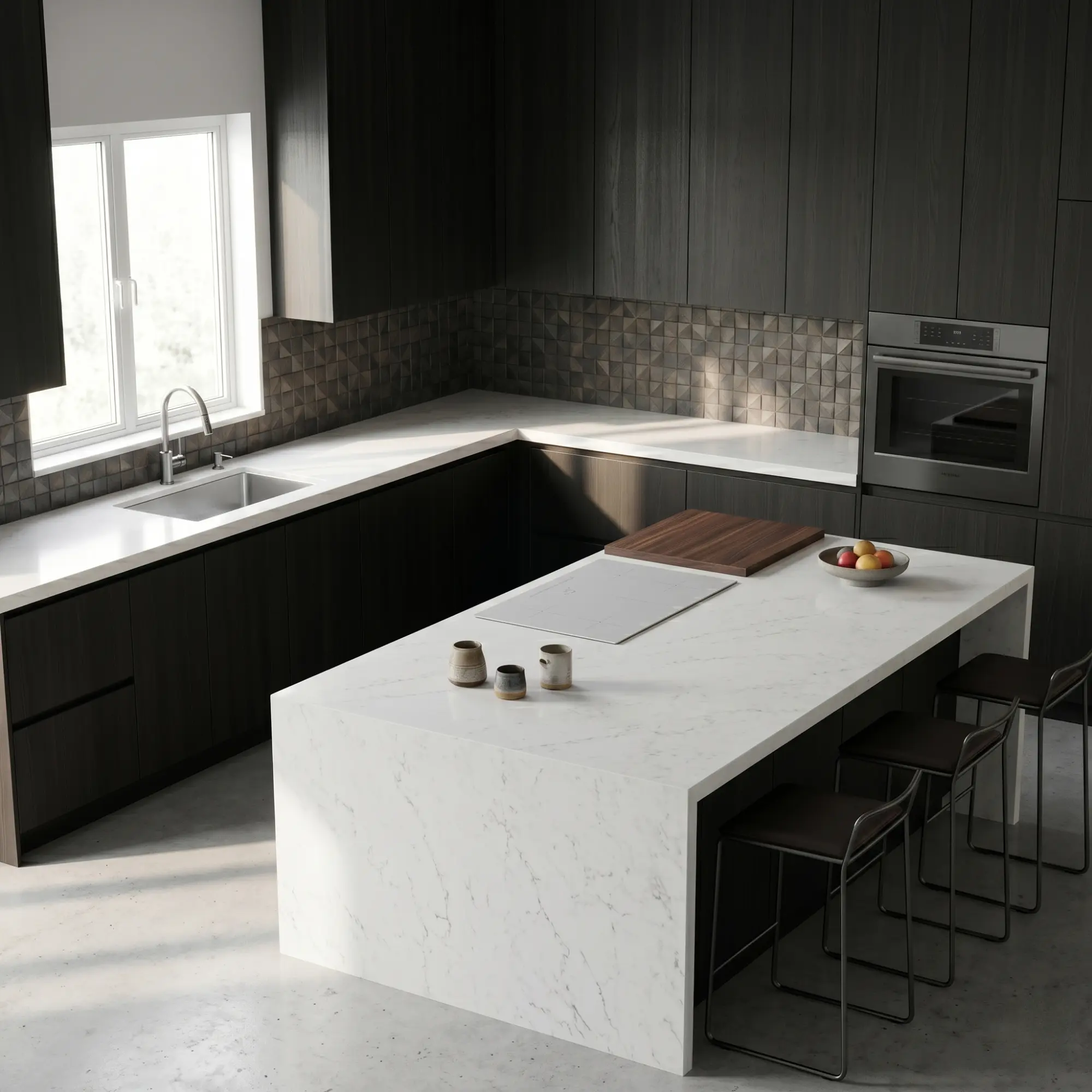
Think About Daily Use
Kitchen design is not only about appearance. The way the kitchen is used should also influence the countertop choice.
Households that cook frequently may prefer materials known for durability and easy maintenance. Others may prioritize visual impact if the kitchen is used more for entertaining.
For instance:
- Granite is widely appreciated for its natural durability and variety of patterns.
- Quartz offers consistent appearance and requires minimal maintenance.
- Quartzite combines natural stone character with strong durability.
Selecting a surface that matches daily habits helps ensure the countertop remains practical for years to come.
Size and Pattern Matter
Large kitchens can often accommodate stones with bold movement or dramatic veining. In smaller kitchens, simpler patterns sometimes work better because they keep the space feeling clean and open.
Scale plays an important role in how the countertop integrates with the rest of the design.
A heavily patterned slab may dominate a small kitchen but become a striking feature in a spacious layout with a large island.
See the Full Slab Before Deciding
Photographs and small samples can give an initial idea of a stone’s appearance, but they rarely show the full character of the material.
Natural stones especially vary from slab to slab. Viewing the full slab allows homeowners to see:
- the direction of the veining
- color variations
- areas of stronger movement
This step helps ensure the selected slab fits the intended design of the kitchen.
Work with a Fabricator Who Understands Design
Countertop selection is easier when homeowners can discuss their kitchen plans with experienced fabricators. Fabrication professionals can evaluate measurements, layout, and stone characteristics to recommend suitable options.
At Chicago Countertop Co., homeowners can explore a wide range of materials including granite, quartz, and quartzite while reviewing full slabs in person. This approach allows customers to compare options and choose surfaces that complement their kitchen design.
A Countertop Should Support the Entire Kitchen
A well-chosen countertop does more than fill space between cabinets. It supports the entire kitchen design by tying together color, material, and functionality.
When the countertop aligns with the kitchen layout, cabinet style, and daily use patterns, the result is a space that feels both practical and visually balanced.
Taking the time to evaluate these elements before choosing a material can make a significant difference in the final outcome of a kitchen project.