

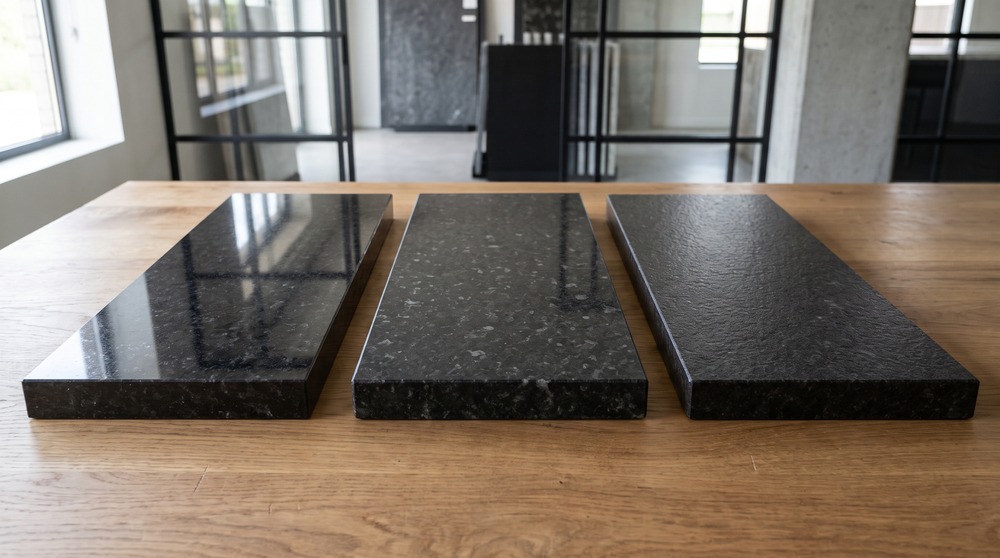
The finish changes how countertop stone reflects light, feels to the touch and handles everyday marks. The same black granite looks reflective when polished, understated when honed and richly textured when leathered.
If you are comparing honed vs. polished vs. leathered countertops, here is the quick answer:
-
- Polished: A glossy, color-enhancing surface that is the easiest to wipe clean.
- Honed: A smooth matte or satin surface with little glare. It shows oils and touch marks more and needs closer attention to spills.
- Leathered: A gently textured, low-sheen surface that hides smudges well but needs extra cleaning in its textured areas.
No finish is best for every stone or household. At Chicago Countertop Co.’s indoor showroom in Bensenville, you can compare full-size slabs before you choose.
What Is a Polished Countertop Finish?
A polished finish is created by refining stone with fine abrasives until it develops a smooth, reflective surface. It brings out the colors, mineral details and veining in granite, marble and quartzite.
Polishing makes dark stone look deeper in color. Its smooth surface also lets you wipe away crumbs and spills with a soft cloth and a suitable cleaner.
Advantages of polished countertops
- Highlight natural colors, crystals and veining.
- Offer the smoothest surface of the three, so daily cleaning is quick.
- Usually absorb liquids more slowly than a honed version of the same natural stone.
What to consider
- Fingerprints, streaks and dried water spots stand out on dark, glossy surfaces.
- Scratches and dull patches are more noticeable under direct light.
- Polished marble can develop visible etch marks when exposed to acidic foods and drinks. Polishing does not prevent etching.
Best for: Homeowners who want vibrant stone colors, shine and easy daily cleaning. Polished granite or quartzite is a strong choice for an active kitchen.
What Is a Honed Countertop Finish?
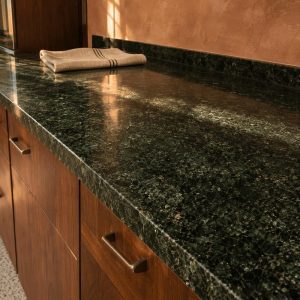
A honed finish smooths stone without bringing it to a high gloss. The matte or satin surface reduces reflections and suits muted colors and simple cabinetry.
Honed black granite looks grayer than its polished equivalent. On marble, honing makes minor etching less noticeable because there is no glossy reflection to interrupt. It does not make marble resistant to acids.
Advantages of honed countertops
- Create a subdued, low-glare appearance.
- Work especially well with marble and understated kitchen designs.
- Make small scratches and etch marks less obvious than on a glossy surface.
What to consider
- Many honed natural stones absorb liquids more readily than their polished counterparts. How often to seal depends on the particular slab and its treatment.
- Oils, fingerprints and water marks show, especially on dark or uniformly colored surfaces.
- Some matte or honed engineered-quartz products show metal transfer marks and need more frequent wiping. Follow the manufacturer’s care instructions.
Best for: Homeowners who love a matte look and accept its cleaning needs. Compare honed and polished slabs side by side at the Chicago Countertop Co. showroom.
What Is a Leathered Countertop Finish?
A leathered finish adds texture using diamond-tipped brushes, bringing out variations in the stone’s structure. It is less shiny than polished stone and more textured than honed stone.
Leathered granite looks especially good in dark or patterned colors, keeping its richness without sharp reflections. Some quartzites also come leathered, which makes an eye-catching choice for a kitchen island.
Advantages of leathered countertops
- Add texture and depth that a smooth finish cannot provide.
- Hide fingerprints, smudges and minor water marks, especially on patterned stone.
- Offer a low-sheen alternative that preserves much of the stone’s character.
What to consider
- Fine crumbs, flour or dried spills can collect in recessed areas and take more effort to remove.
- The degree of texture varies from slab to slab. Some are nearly smooth, while others are noticeably uneven.
- Repairs or refinishing are harder to blend invisibly than on a polished surface.
- Leathered natural stone may still need sealing. The finish alone does not determine stain resistance.
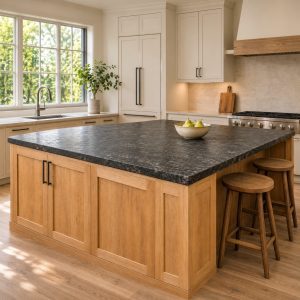
Best for: Homeowners who enjoy tactile dark granite or quartzite and can maintain its texture. Check which slabs are available in Chicago Countertop Co.’s live inventory.
Honed vs. Polished vs. Leathered Countertops: At a Glance
| Feature | Polished | Honed | Leathered |
|---|---|---|---|
| Appearance | Glossy and reflective | Smooth, matte or satin | Textured, low sheen |
| Color | Deepest and most vivid | Softer and lighter | Rich, with added texture |
| Fingerprints and water marks | Show clearly on dark stone | Show oils and touch marks | Least visible, especially on patterned stone |
| Stain resistance | Best of the three on the same stone | Needs closer attention to spills | Depends on stone, texture and treatment |
| Daily cleaning | Easiest to wipe | Smooth, but marks need extra wiping | Texture needs occasional extra cleaning |
| Sealing | Standard schedule for the stone | Check more often | Check more often |
| Best suited to | Crisp, reflective kitchens | Quiet, matte designs | Tactile, character-rich designs |
The stone’s composition and treatment matter as much as its finish.
Which Finish Works Best with Each Countertop Material?
Granite: All Three Finishes Are Worth Comparing
Granite comes in all three finishes. Polishing highlights crystals, honing softens the appearance and leathering adds texture, especially to black and charcoal stone. See the granite countertops buyer’s guide for more.
Quartzite: Consider the Stone’s Natural Movement
Polishing emphasizes the dramatic veins of many quartzites, while leathering adds texture. Availability varies, and not every quartzite comes in every finish.
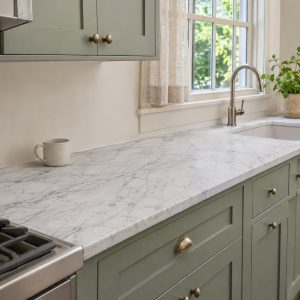
Marble: Honed Is a Popular Choice, Not a Protective Treatment
Honed marble makes small etch marks less noticeable. Polished marble highlights veining but reveals acid-related dull spots. Neither finish prevents etching. Read Marble Countertops: Pros, Cons & the Myths Worth Ignoring for more.
Quartz: Check the Manufacturer’s Finish Options
Engineered quartz is usually polished, although some brands offer honed, matte or brushed options with different cleaning requirements. Quartz does not need sealing; follow the manufacturer’s instructions.
For another example of how finish and color affect appearance, explore the guide to black countertops in Chicago.
Frequently Asked Questions
Do honed or leathered countertops cost more than polished countertops?
They can. Extra processing, availability and material affect pricing, but neither finish is automatically more expensive. Compare quotes for specific slabs with the same dimensions and fabrication requirements.
Can you change a countertop finish after installation?
Sometimes a specialist can hone or repolish installed natural stone. Recreating a leathered texture is harder, and some factory finishes cannot be altered safely. Consult a restoration professional first.
Which countertop finish is best for a busy family kitchen?
Polished granite or quartzite is the best starting point for easy wiping. Leathered stone hides smudges but needs attention in textured areas. Material, color and pattern also affect maintenance.
Do all countertop finishes need sealing?
No. Some natural stones benefit from penetrating sealers; others do not need them. Honed and leathered surfaces should be checked more often, but there is no universal schedule. Engineered quartz should not be sealed. Follow the guidance for your actual material.
Find the Right Finish for Your Kitchen
Polished finishes emphasize shine, honed finishes look softer and leathered finishes add texture. The best way to decide is to see real slabs up close. Our guide on how to choose a stone slab in person explains what to look for.
Chicago Countertop Co. offers more than 4,000 full-size slabs at its indoor showroom in Bensenville and serves Chicago and the surrounding 150-mile area. Our team helps you select the material and handles measuring, fabrication and installation.
Ready to compare finishes for your project?