

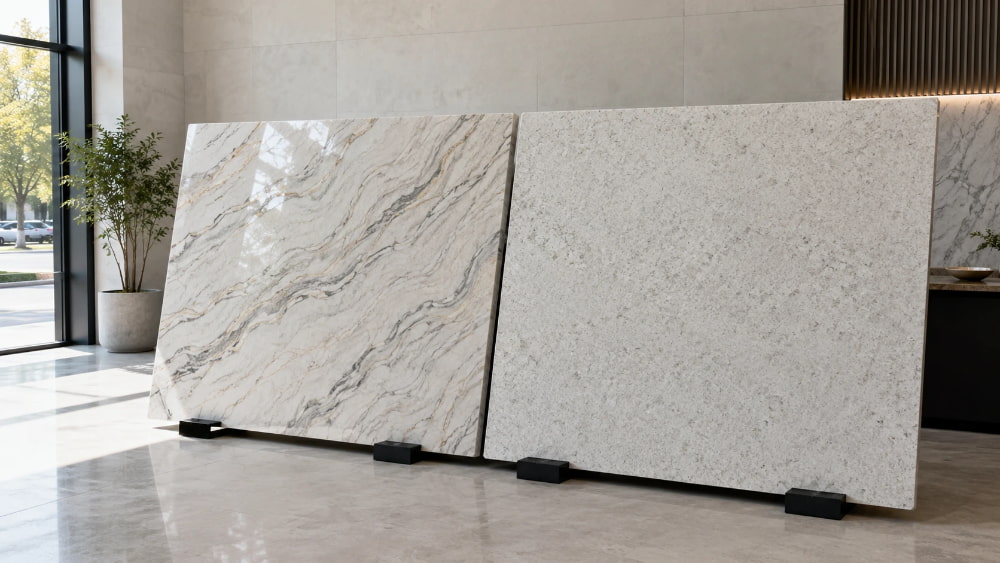
Every week, someone walks into our Chicago showroom and asks for “a quartz countertop” while pointing at a quartzite slab — or the other way around. Nobody’s embarrassed, because the confusion is completely understandable: the names are nearly identical, both contain quartz mineral, and both are gorgeous.
But they are fundamentally different materials — one is made by the earth, the other in a factory — and they behave differently in your kitchen. Here’s the difference in plain language, so you can walk into any showroom knowing exactly what you’re looking at.
The One-Sentence Difference
Quartzite is a natural stone quarried from the earth and cut into slabs. Quartz is an engineered product — roughly 90% ground quartz mineral blended with resins and pigments, poured into molds, and cured into slabs.
Everything else — how they handle heat, how they’re maintained, how they look, what they cost — flows from that one difference.
How Each One Is Made
Quartzite began as sandstone. Over millions of years, heat and pressure deep in the earth fused it into an extremely hard metamorphic rock. Quarries — most famously in Brazil — cut it into slabs, and what you see is exactly what nature made: every slab is one of a kind, veining and all.
Quartz is manufactured. Crushed quartz crystals are mixed with polymer resins (typically 7–10% of the material) and pigments, then compressed and cured. Because humans control the recipe, quartz comes in nearly any color and pattern — including remarkably convincing marble looks — and every slab of a given design is consistent.
Neither origin story makes one “better.” They’re just different tools.
Head to Head: What Actually Matters in a Kitchen
Hardness and scratches. Quartzite is the winner — it’s harder than granite, hard enough that we recommend cutting boards mainly to protect your knives, not the counter. Quartz is also very scratch-resistant in daily use; it’s simply not in quartzite’s league.
Heat. This is the biggest practical difference. Quartzite is natural stone through and through — a hot pan won’t faze it. Quartz’s resin content can scorch or discolor from direct high heat, so trivets are a lifelong rule. If you’re an intense cook who parks pans wherever there’s room, this single row of the comparison may decide it.
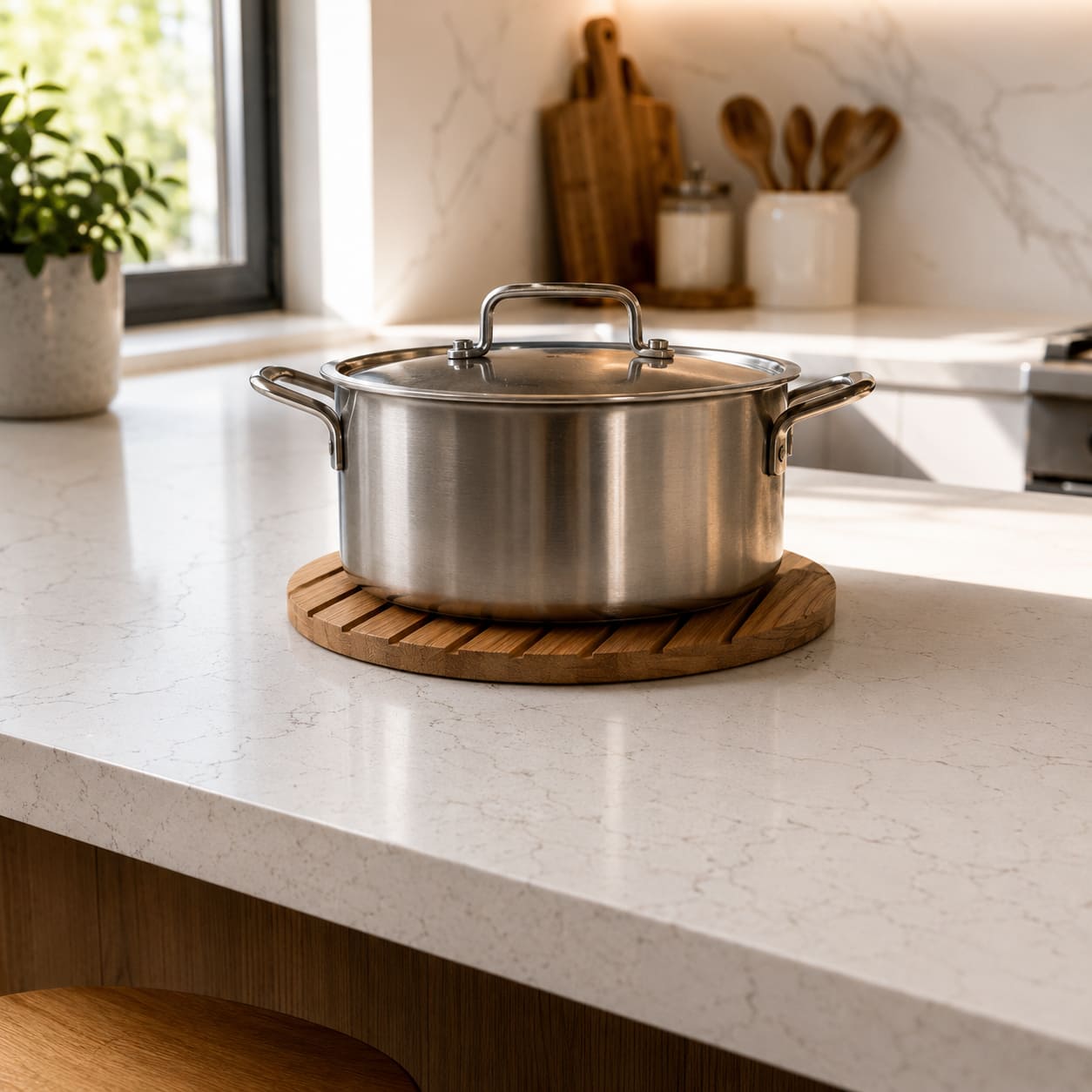
Stains and maintenance. Here quartz wins. It’s non-porous — nothing soaks in, nothing needs sealing, ever. Quartzite is porous like all natural stone and needs periodic sealing (a simple 20-minute DIY ritual, typically once a year). Sealed quartzite resists stains well, but the ritual has to actually happen.
Etching. Neither material etches from household acids like lemon or wine — a key advantage both hold over marble. (True quartzite, that is: some stones are sold as quartzite but are actually marble in disguise — more on that below.)
Looks. Quartzite offers what no factory can: genuinely unique, flowing, often marble-like veining with natural depth and translucency. Quartz offers what no quarry can: total consistency and control — the sample you approve is exactly what arrives. Neither is wrong; it’s a personality question. Our guide to choosing a countertop material walks through that question step by step.
Outdoor use. Quartzite handles UV and Chicago freeze-thaw cycles beautifully. Quartz resins can yellow and degrade in direct sunlight — most manufacturers void the warranty for outdoor installation.
What About Price?
In the Chicago area, installed prices typically run:
- Quartz: $60–$150 per square foot
- Quartzite: $90–$210 per square foot
Quartz spans from accessible to premium depending on brand and design; quartzite starts near where mid-range quartz ends and climbs from there, because rare natural slabs can’t be mass-produced. For full breakdowns, see our quartz cost guide.
The Imposter Warning: “Soft Quartzite” Isn’t Quartzite
One buyer’s trap worth knowing: some stones are sold under the quartzite label that are actually dolomitic marble — Fantasy Brown is the most common example. These “soft quartzites” etch and scratch like marble, not like true quartzite. It’s not necessarily a dealbreaker (they’re beautiful stones), but you should know what you’re buying. The test is simple: true quartzite won’t etch from lemon juice. A reputable fabricator will tell you straight — and will let you test a sample.
So Which One Should You Choose?
Choose quartz if:
- You want zero maintenance — wipe and walk away
- You want a specific, consistent look (especially marble-style patterns)
- Trivets are already a habit in your kitchen
- Your budget favors the $60–$100/sq ft range
Choose quartzite if:
- You want genuinely natural, one-of-a-kind stone
- Hot pans land on your counters, period
- You love the marble look but want real stone durability
- An annual 20-minute sealing ritual doesn’t scare you
- It’s for an outdoor kitchen
There’s no universal winner — we install both every week for equally happy customers. The right answer depends on how you cook, clean, and live.
FAQ
Is quartzite more expensive than quartz? Usually, yes. Quartzite starts around $90/sq ft installed in Chicago versus $60 for entry quartz. The gap reflects rarity: natural slabs can’t be manufactured to meet demand.
Which is more durable, quartz or quartzite? Quartzite is harder and fully heat-proof. Quartz is more stain-proof and maintenance-free. “More durable” depends on which threat your kitchen actually faces — heat and knives, or spills and neglect.
Can quartz look like quartzite? Increasingly well. Premium quartz lines imitate natural veining convincingly at arm’s length. Up close, natural quartzite still has a depth and translucency that engineered stone hasn’t matched.
Do both need sealing? No — only quartzite. Quartz is non-porous and never needs sealing; quartzite needs it periodically, typically once a year.
Is quartzite the same as quartz with a different name? No. Quartzite is a natural metamorphic rock; quartz countertops are an engineered blend of quartz mineral and resin. The similar names cause endless confusion — hence this article.
See Them Side by Side
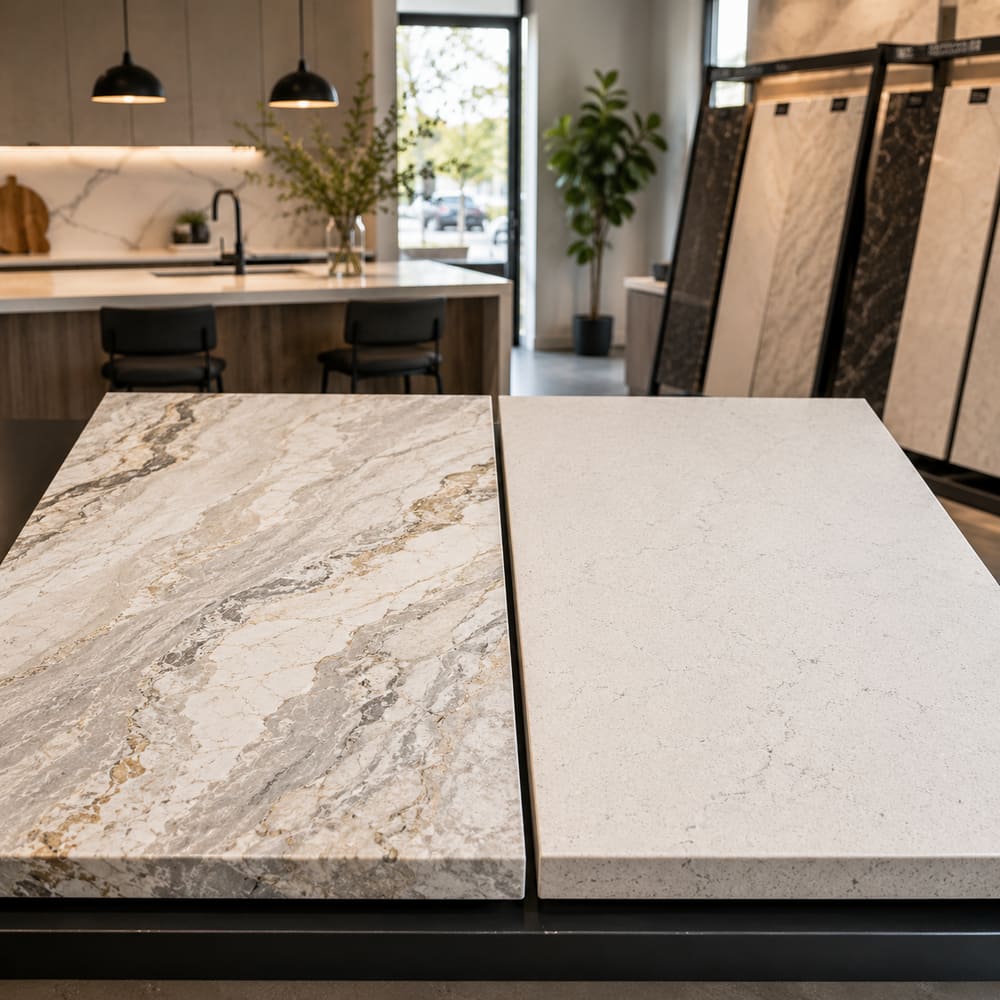
Reading about the difference is one thing; standing between a quartz slab and a quartzite slab is another — the depth of natural stone and the consistency of engineered stone make the comparison instant and obvious in person.
Browse our live inventory to shortlist slabs of both, then visit our Chicago showroom and put your hands on them. Our team will walk you through the practical differences for your specific kitchen — no pressure, no jargon.
Call (+1) 773-632-1600 or make an appointment — bring your questions, leave with clarity.