

Material Guide
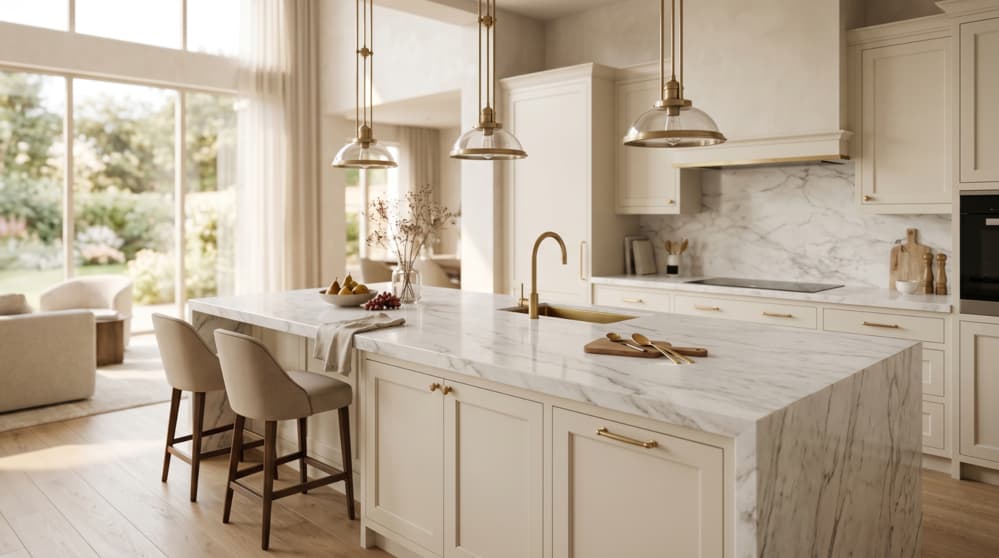
Marble is the most loved — and most misunderstood — countertop material there is. Before you rule it out (or fall for it), here’s an honest look at what marble really offers, where it falls short, and which “facts” you’ve heard are actually myths.
Few materials stir up as much opinion as marble. Some homeowners dream of it for years; others are warned away by a friend who swears it stained the first week. The truth sits somewhere in the middle — marble is a genuinely beautiful, livable surface, but only when you understand what you’re signing up for.
At Chicago Countertop Co., we’ve fabricated and installed marble for kitchens, bathrooms, fireplaces, and statement islands across Chicago and the surrounding suburbs — Naperville, Oak Brook, Hinsdale, Schaumburg, Evanston, Barrington, and beyond. Here’s the straight story, organized into the real pros, the real cons, and the myths that scare people off for the wrong reasons.
First, what marble actually is
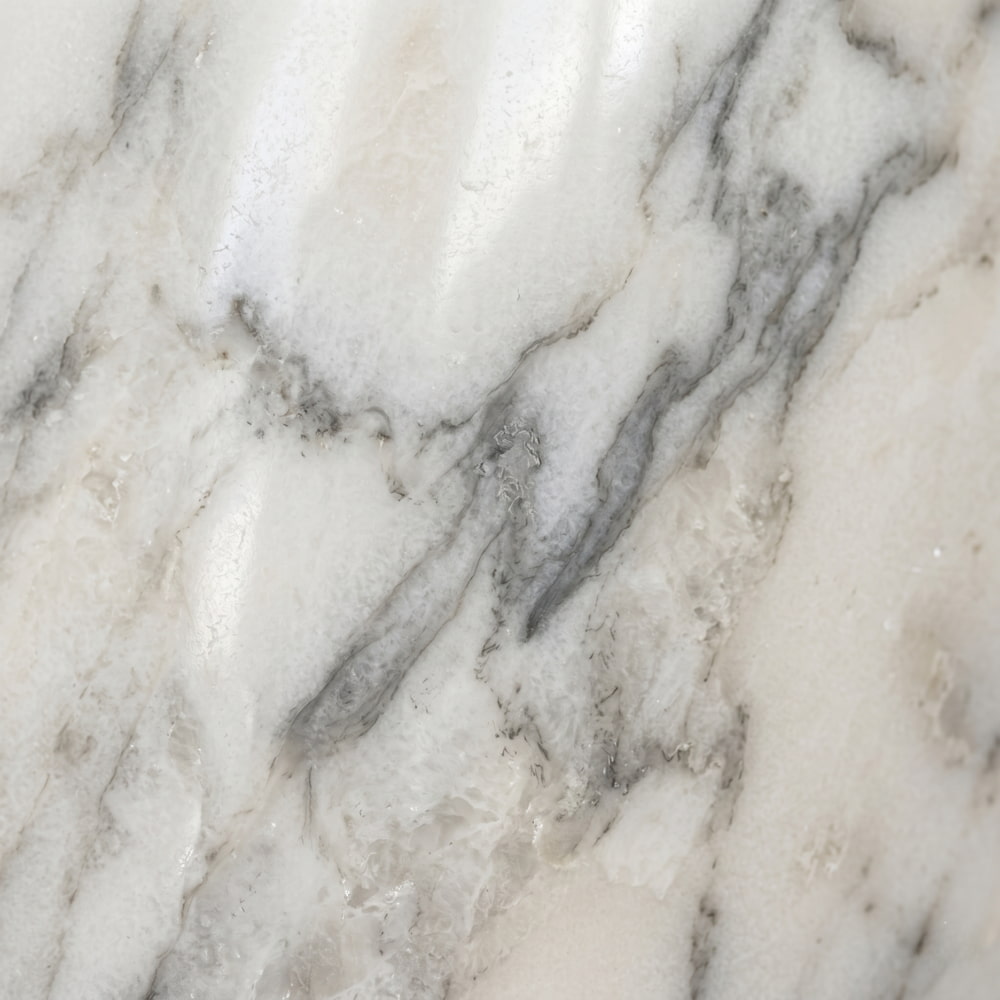
Marble is a natural stone formed when limestone is transformed by heat and pressure over millions of years. That process gives marble its signature look: soft, flowing veins of mineral running through a lighter base. Because it’s a natural calcium-based stone, marble is softer and more reactive than engineered surfaces — and that single fact explains almost every pro, con, and myth that follows.
The pros: why people fall in love with marble
Unmatched, timeless beauty
This is the headline. No engineered material has fully replicated the depth and softness of real marble veining. Each slab is unique, and the look reads as instantly elegant and classic — the reason marble has defined luxury interiors for centuries and never goes out of style.
A naturally cool surface
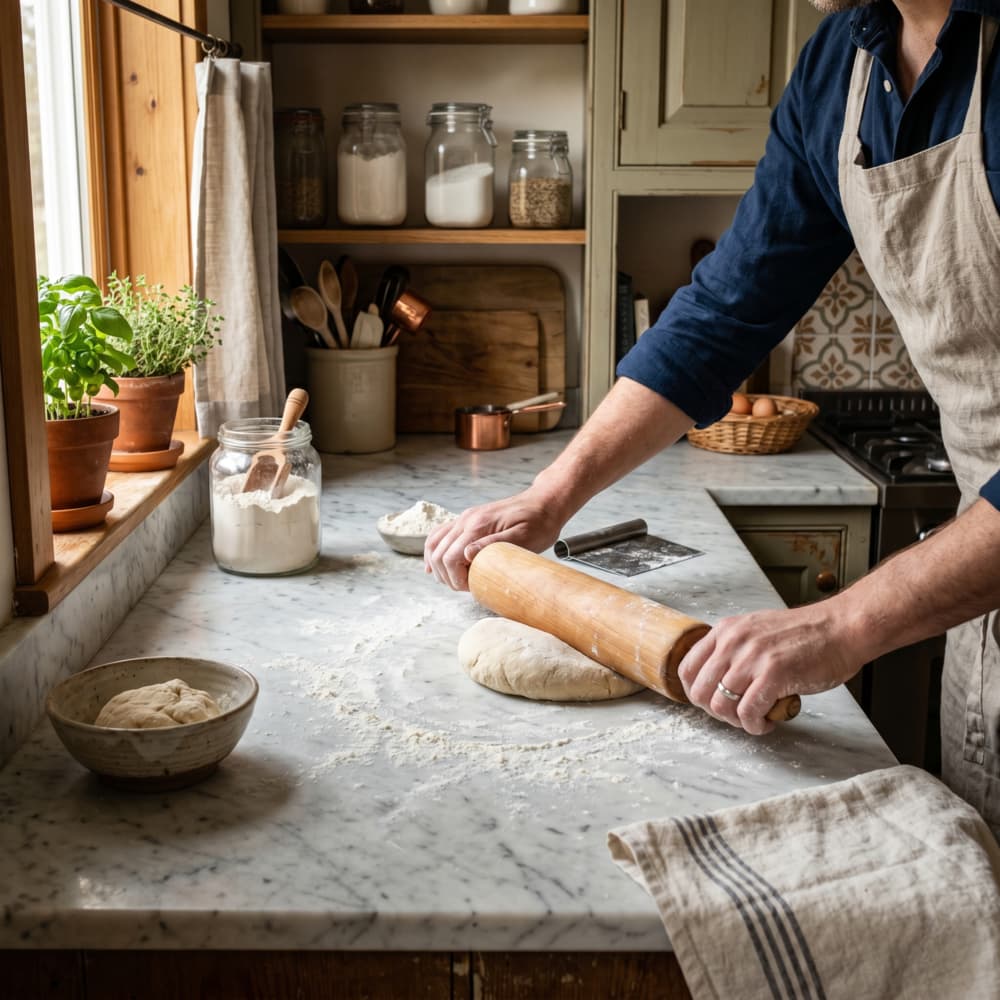
Marble stays cool to the touch, which is why bakers and pastry chefs have always prized it for rolling dough and working with chocolate. It’s a small thing, but a real, functional advantage.
Every slab is one of a kind
Because marble is natural, no two slabs are identical. You’re not choosing a pattern off a sample chip — you’re choosing a singular piece of stone. For a statement island, a fireplace surround, or a powder room vanity, that uniqueness is part of the appeal.
It adds lasting value and appeal
Marble signals quality. In the right space, it’s the kind of finish that makes a kitchen or bath feel considered and high-end — and that perception carries weight with buyers who appreciate natural materials.
The cons: what you genuinely need to accept
These are the real trade-offs — not scare stories, just the honest cost of choosing a soft natural stone.
It etches from acids
This is marble’s defining weakness, and it’s different from staining. Acidic things — lemon juice, wine, vinegar, tomato, some cleaners — react with the calcium in marble and leave a dull, slightly etched mark where the polish is eaten away. On polished marble these show as faint cloudy spots. It’s the single most important thing to understand before buying.
It’s softer and can scratch
Marble is softer than granite or quartzite, so it’s more prone to scratches and chips at edges from heavy impact. It rewards a little care — cutting boards, trivets, and not dragging cast iron across it.
It’s porous and needs sealing
Because marble absorbs liquid, it should be sealed at installation and resealed periodically. Sealing dramatically slows staining from spills, though it does not prevent etching, which is a chemical reaction, not absorption.
It asks for mindful habits
Marble isn’t high-maintenance in terms of effort, but it does ask for awareness: wipe acidic spills quickly, use mild pH-neutral cleaners, and skip abrasive scrubbers. If you want a surface you never have to think about, marble may frustrate you.
The honest summary: marble trades a little durability and convenience for beauty nothing else can match. If you love the look and can accept a patina that develops over time, it’s wonderful. If a single etch mark will bother you for years, a marble-look quartz or quartzite is the smarter pick.
The myths: what you’ve heard that isn’t quite true
Myth 1: “Marble can’t be used in a kitchen”
Marble has been used in working kitchens for centuries — in Europe, professional bakeries, and historic homes that still look beautiful today. It will show wear and develop character, but “can’t be used” is false. The real question is whether you’ll embrace a lived-in patina or expect a flawless surface forever.
Myth 2: “Etching and staining are the same thing”
They’re completely different. A stain is a discoloration from a liquid soaking in (often removable). An etch is a physical dulling of the surface from acid — there’s no color, just a change in sheen. Sealing helps with stains but not etching. Knowing the difference is the key to understanding marble.
Myth 3: “Sealing makes marble stain-proof and etch-proof”
Sealing is a barrier against absorption, so it buys you time against stains. It does nothing to stop etching, because acid reacts with the stone’s surface regardless of sealer. No sealer makes marble bulletproof — anyone who tells you otherwise is overselling.
Myth 4: “All marble is the same”
Marbles vary widely in density and durability, and finish matters enormously. A honed (matte) finish hides etching far better than a polished one, because there’s no high gloss for an etch to dull. Choosing the right marble and the right finish for how you live changes the experience completely.
Myth 5: “If you want the marble look, you have to risk real marble”
Not anymore. Marble-look quartz and many quartzites now offer convincing veining with far more resistance to etching and staining. Real marble still has a depth they can’t fully copy, but if durability is your priority, you have excellent alternatives.
So is marble right for you?
Marble rewards the right owner and frustrates the wrong one. A quick gut-check:
- Choose marble if you love its look above all, you’re drawn to natural materials that age gracefully, and you’ll happily wipe spills and live with some character over time.
- Consider a honed finish if you want marble but worry about etch marks showing — it’s far more forgiving day to day.
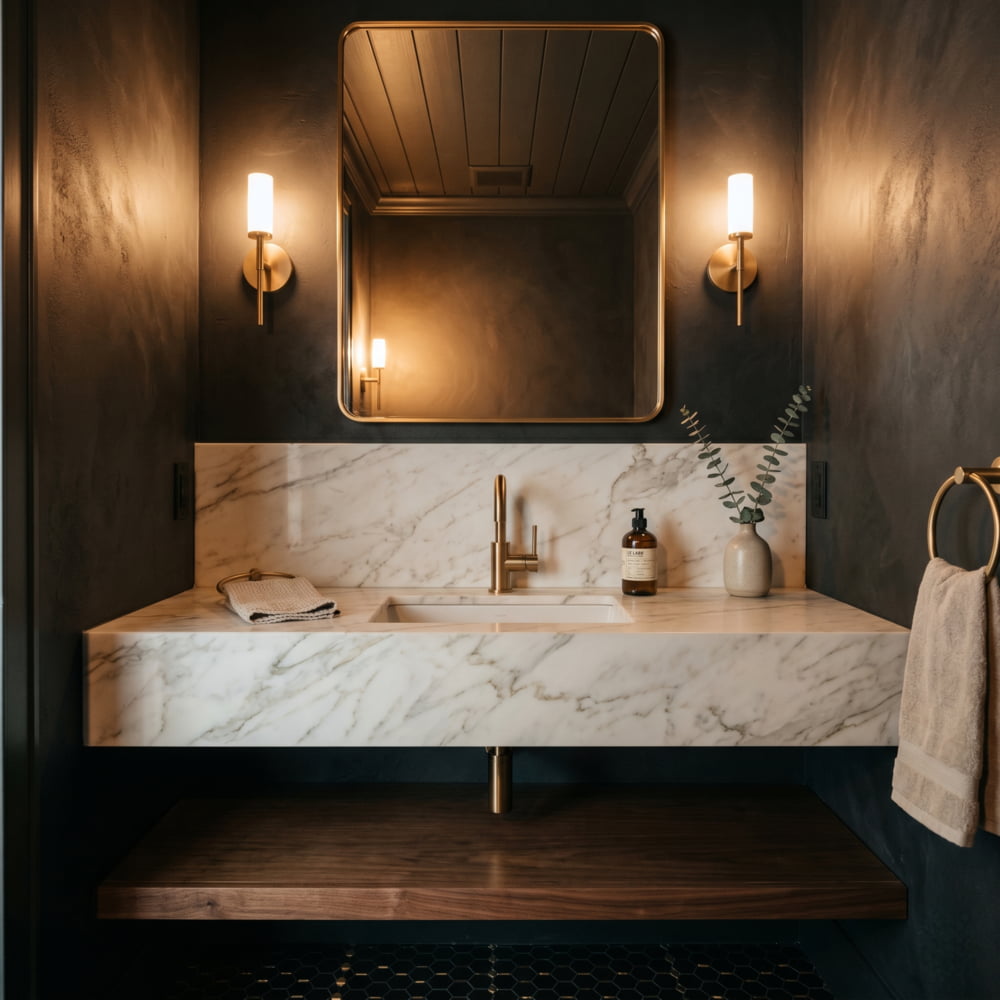
- Use it where it shines — a powder room vanity, a fireplace surround, a bar, or a baking station sees less abuse than a primary kitchen counter.
- Choose a marble-look quartz or quartzite instead if you want the aesthetic but need a near-maintenance-free, etch-resistant surface.
Common questions about marble
Does marble really stain that easily?
Less than people fear, especially when sealed and wiped promptly. The more common issue isn’t staining — it’s etching from acidic foods and cleaners, which is a separate, surface-level effect.
Is honed or polished marble better?
For everyday durability, honed (matte) is usually the more forgiving choice because it hides etching. Polished gives a brighter, more formal look but shows dull spots more readily.
How often does marble need sealing?
It varies by the specific marble and how it’s used, but periodic resealing is standard for natural stone. We’ll go over sealing and care in detail in a dedicated maintenance guide.
What’s the closest low-maintenance alternative?
Marble-look quartz gives you the aesthetic with no sealing and strong stain resistance, while quartzite offers a natural-stone look with far more hardness than marble.
See marble slabs in person before you decide
The best way to judge marble is to stand in front of a full slab and see the veining, finish, and movement for yourself. Explore our Chicago-area showroom, compare marble against quartz and quartzite side by side, and let our team help you choose the right stone for how you actually live.