

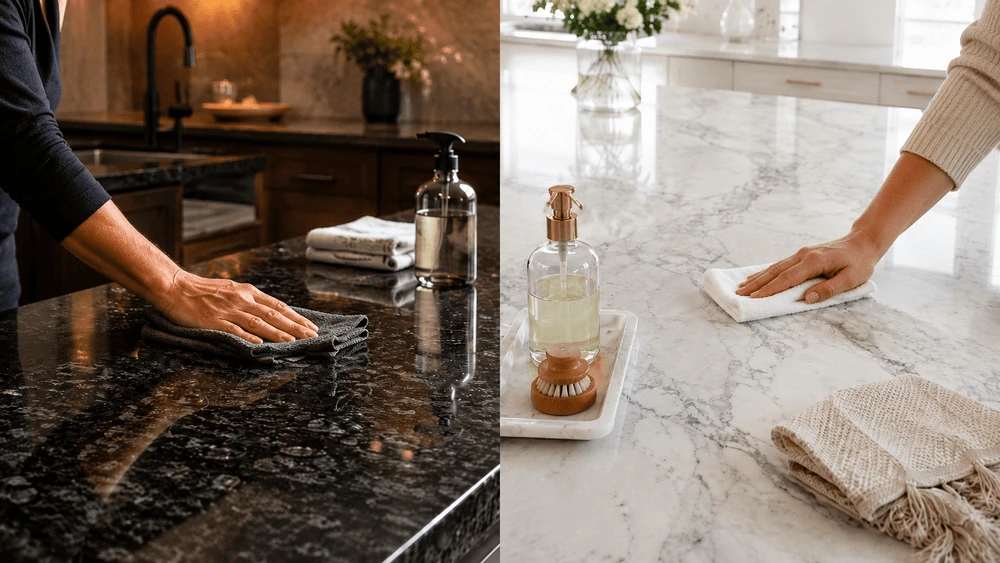
Granite and marble countertops can stay beautiful for decades when they are cleaned, protected, and maintained the right way. Both materials are natural stone, but they do not behave exactly the same. Granite is known for strength and everyday durability, while marble offers a softer, more classic look that needs a little more attention.
The good news is that countertop care does not have to be complicated. A few simple habits can protect the surface, reduce stains, and help your kitchen or bathroom keep its polished appearance for years. At Chicago Countertop Co., we work with natural stone surfaces such as granite and marble, helping homeowners choose materials that fit both their design goals and daily lifestyle. The company’s own site presents marble and granite among its countertop material options.
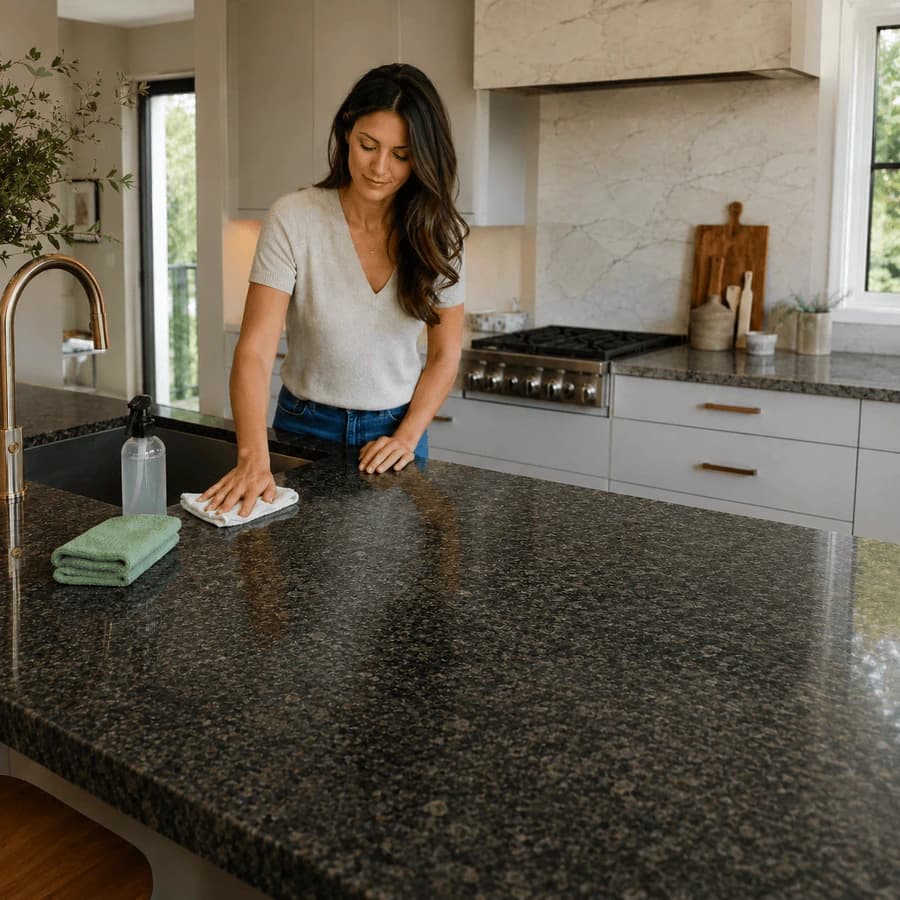
Know the Difference Between Granite and Marble
Granite and marble are both natural stones, but their structures are different.
Granite is generally harder and more resistant to scratches, heat, and daily wear. This makes it a popular choice for busy kitchens, family homes, and high-use spaces.
Marble is softer and more sensitive to acidic substances. Lemon juice, vinegar, wine, tomato sauce, and some harsh cleaners can leave dull marks known as etching. This does not always mean the stone is stained; it means the surface finish has been affected.
Understanding this difference is the first step. Granite often forgives everyday use more easily. Marble rewards careful use with a beautiful, refined appearance.
Clean Daily with Mild Products
Daily cleaning is one of the easiest ways to keep natural stone countertops looking fresh. You do not need strong chemicals. In fact, strong cleaners can create more problems than they solve.
Use warm water, a soft cloth, and a small amount of mild dish soap or a pH-neutral stone cleaner. The Natural Stone Institute recommends neutral cleaners, stone soap, or mild liquid dishwashing detergent with warm water for stone surfaces. It also advises rinsing well and drying with a soft cloth to prevent streaks or residue.
Avoid these products on granite and marble:
- Vinegar
- Lemon-based cleaners
- Bleach
- Ammonia
- Abrasive powders
- Harsh bathroom cleaners
- Rough scrubbing pads
These products can weaken sealers, dull polished surfaces, or damage marble more quickly.
Wipe Spills Quickly
Spills are part of daily kitchen life. The key is not panic, but speed.
On granite, spills may not cause immediate damage if the stone is properly sealed. Still, oil, wine, coffee, and colored liquids should be wiped up quickly.
On marble, acidic spills need faster attention. Lemon juice, orange juice, wine, tomato sauce, and vinegar-based dressings can leave etch marks if they sit too long.
Use a soft cloth or paper towel to blot the spill. Do not spread it around aggressively. After blotting, clean the area with mild soap and water, then dry it.
Use Cutting Boards and Trivets
Granite is strong, but that does not mean it should be treated like a cutting board. Cutting directly on stone can dull your knives and may eventually affect the surface finish.
Marble is more vulnerable to scratches, so cutting boards are even more important.
Use cutting boards for food preparation and trivets for hot pans. Granite can handle heat better than many materials, but repeated direct heat exposure can still affect sealers or cause thermal stress in some situations. Marble can also be sensitive to sudden temperature changes.
Small protective habits make a big difference over time.
Seal When Needed
Sealing is one of the most important parts of granite and marble countertop care. A sealer does not make stone completely stain-proof. It helps slow down absorption, giving you more time to clean spills before they become stains.
The Natural Stone Institute notes that sealing marble and granite countertops often makes sense and recommends quality sealers that resist water- and oil-based stains. Once properly sealed, stone becomes more resistant to everyday dirt and spills.
How often should you seal your countertops? It depends on the stone, finish, color, porosity, and daily use. Some stones need sealing more often than others. A simple water test can help:
Pour a small amount of water on the surface and wait about 10 to 15 minutes. If the water darkens the stone or absorbs quickly, the countertop may need resealing. If the water stays on the surface, the sealer is likely still working.
For marble, sealing is especially important because the stone is more absorbent and more sensitive to staining.
Do Not Confuse Etching with Staining
This is especially important for marble.
A stain usually changes the color of the stone because something has absorbed into the surface. Oil, coffee, wine, or rust can create stains.
Etching is different. It is a dull or light mark caused by acidic contact with the stone. Marble is calcium carbonate-based, so acidic substances like lemon juice, vinegar, and tomato can damage the surface finish. Stone care guidance also notes that marble can be etched by acidic solutions and inappropriate cleaning agents.
A stain may sometimes be treated with a poultice. Etching usually requires polishing or professional restoration, depending on the severity.
Protect High-Use Areas
Some areas of the countertop receive more daily contact than others. These include:
- Around the sink
- Near the cooktop
- Coffee station areas
- Food prep zones
- Bathroom vanity areas
- Kitchen island seating edges
These areas should be cleaned and dried more often. Around sinks, standing water and soap residue can create dullness or buildup. In coffee stations, sugar, cream, coffee, and water rings can leave marks if ignored.
Use trays under soap dispensers, coffee machines, oils, and frequently used bottles. This keeps small spills from sitting directly on the stone.

Be Careful with Bathroom Countertops
Granite and marble are not only used in kitchens. Many homeowners also choose them for bathroom vanities.
Bathroom products can be surprisingly harsh on natural stone. Toothpaste, perfume, shaving cream, hair dye, makeup, nail polish remover, and some skincare products may affect the surface.
Marble vanities need extra care because many personal care products contain acids, alcohol, dyes, or oils. Keep products on trays and wipe the surface regularly.
Handle Stains the Right Way
If you notice a stain, avoid scrubbing aggressively. Rough scrubbing can make the area worse, especially on polished marble.
For light surface marks, start with mild soap and water. If the stain has absorbed into the stone, a poultice may be needed. A poultice is a paste-like treatment designed to draw the stain out of the stone.
Different stains need different approaches. Oil-based stains, organic stains, rust, ink, and water marks are not treated the same way. When in doubt, it is better to ask a stone professional before applying random cleaning products.
Build a Simple Care Routine
A good countertop care routine does not need to be complicated.
Daily:
Wipe the surface with a soft cloth, mild soap, and warm water. Dry after cleaning.
Weekly:
Clean more carefully around the sink, cooktop, and prep areas. Check for buildup near edges and seams.
Monthly:
Look for dull spots, water absorption, or areas where the surface feels different.
Yearly:
Check whether sealing is needed. High-use kitchens may need more frequent attention.
This simple routine can help both granite and marble age gracefully.
When to Call a Professional
Some countertop issues are easy to manage at home. Others need professional care.
Call a countertop or stone care professional if you notice deep stains, serious etching, cracks, loose seams, dull polished areas, or water that absorbs very quickly even after sealing.
Professional maintenance can often restore the surface and extend the life of the countertop.
Final Thoughts
Granite and marble countertops are long-term investments. They bring natural beauty, durability, and character into a home, but they perform best when cared for correctly.
Granite is generally easier to maintain and better suited for heavy daily use. Marble needs more attention, especially around acidic foods and harsh cleaners. Both materials benefit from gentle cleaning, quick spill removal, protective habits, and proper sealing.
With the right care routine, your countertop can continue to look clean, elegant, and well-kept for decades. For homeowners planning a new kitchen or bathroom project, Chicago Countertop Co. can help you choose the right natural stone surface for your space, lifestyle, and maintenance expectations.
FAQ
1. How often should granite and marble countertops be sealed?
It depends on the stone, finish, color, and how often the countertop is used. Some countertops may need sealing once a year, while others may last longer. A simple water test can help: if water darkens the stone or absorbs quickly, it may be time to reseal.
2. Can I clean granite and marble countertops with vinegar?
No. Vinegar is too acidic for natural stone, especially marble. It can weaken the sealer and leave dull marks on the surface. Use warm water, a soft cloth, mild dish soap, or a pH-neutral stone cleaner instead.
3. What is the main difference between granite and marble care?
Granite is generally harder and more resistant to daily wear. Marble is softer and more sensitive to acidic foods and cleaners. Both need gentle cleaning, but marble requires faster spill cleanup and more careful product selection.
4. Are stains and etching the same thing?
No. A stain usually happens when liquid or oil absorbs into the stone and changes its color. Etching is a dull mark caused by acidic substances like lemon juice, vinegar, wine, or tomato sauce. Etching is especially common on marble.
5. Can I place hot pans directly on granite or marble countertops?
It is better to use trivets or heat pads. Granite can handle heat better than many materials, but repeated direct heat may affect the sealer or surface over time. Marble can also be sensitive to sudden temperature changes.