

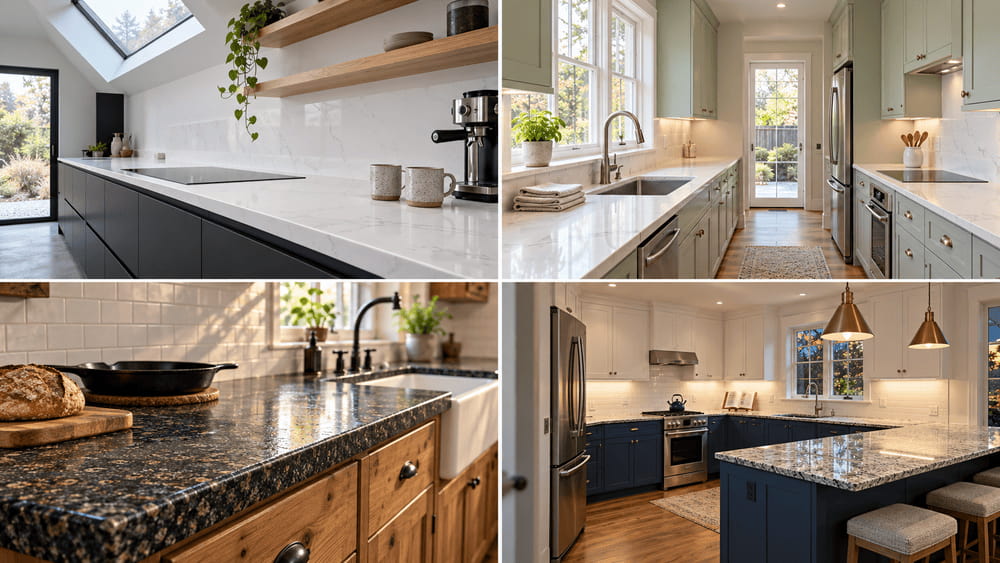
Quartz and granite are two of the most popular countertop choices among Chicago homeowners. Both are durable, both look great, and both can last for decades. The right choice depends on how you cook, how much care you want to give your countertop, and the look you love.
This guide compares quartz vs. granite countertops on the points that matter in a real kitchen: durability, heat and stain resistance, maintenance, appearance, and value. At Chicago Countertop Co., we fabricate and install both materials regularly, so you’ll get a practical answer, not a sales pitch for one material.
The Core Difference: Natural Stone vs. Engineered Stone
Granite is a natural stone. Each slab features unique patterns, color variations, and mineral details, making every granite countertop one of a kind.
Quartz is an engineered stone made by combining natural quartz minerals with resins and pigments. Its controlled manufacturing process allows for consistent colors, patterns, and realistic marble-look designs.
That single difference, natural versus engineered, explains much of what separates these materials. Explore our granite countertops and quartz countertops to see the range of each.
Quartz vs. Granite at a Glance
| Feature | Quartz | Granite |
|---|---|---|
| Material | Engineered stone | Natural stone |
| Appearance | Consistent colors and patterns | Unique natural variations |
| Scratch resistance | Excellent | Excellent |
| Heat resistance | Good; use trivets | Excellent; trivets still advised |
| Stain resistance | Excellent | Very good when sealed |
| Sealing | Not required | Periodic; frequency varies by slab |
| Maintenance | Low | Low to moderate |
| Outdoor use | Only outdoor-rated products | Suitable with proper slab selection |
| Best for | Low-maintenance kitchens | Natural character and heat resistance |
Durability
Both materials are highly durable countertop surfaces. Granite resists scratches very well. Quartz is also highly scratch-resistant, although both materials can chip along edges or corners if struck by a hard object.
For a typical family kitchen, both can last for decades with proper care. Neither material is completely damage-proof, but both are well suited to everyday cooking and food preparation.
Heat Resistance
Granite has the advantage here. As a natural stone, it generally tolerates high temperatures better than engineered quartz. However, using trivets is still recommended to protect the surface from sudden temperature changes and potential damage.
Quartz contains resin, which can be damaged by excessive heat. Placing hot cookware directly on quartz may cause discoloration or other permanent surface damage.
If you frequently cook with hot pots and pans, granite offers greater heat resistance. With either material, using trivets is a sensible habit.
Stains and Maintenance
Quartz has the advantage when it comes to maintenance. Its non-porous surface resists everyday stains from coffee, wine, and cooking oils without requiring sealing. Most spills can be cleaned with mild soap and water, although prompt cleanup is still recommended.
Granite has some natural porosity, so it benefits from periodic sealing. Sealing makes the stone more resistant to staining, and how often it’s needed depends on the slab. A simple water-drop test shows when it’s time to reseal, and our team can recommend the right care for your specific stone.
For homeowners who prefer a simple cleaning routine with minimal upkeep, quartz is often the more convenient choice.
Appearance
Choose granite if you want natural depth, movement, and a slab with its own distinctive character. Its patterns range from subtle mineral flecks to bold color variations that make each installation unique.
Choose quartz if you prefer a consistent appearance, a bright solid white, or a marble-style pattern without marble’s maintenance requirements. Quartz also offers a wide selection of contemporary colors and finishes.
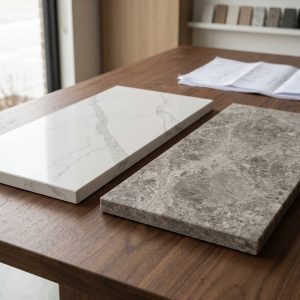
Photos rarely show the full difference. The best way to decide is to see both materials side by side. Our Bensenville showroom offers access to more than 4,000 full-size slabs, and you can preview available stone anytime in our Live Inventory.
What About Price?
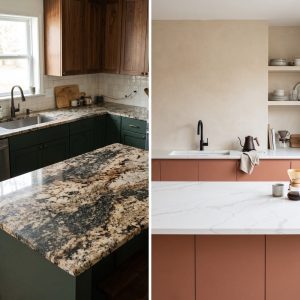
Quartz and granite prices overlap more than most people expect. Entry-level granite is often among the most budget-friendly natural stone options, while premium quartz and exotic granite sit at the top of the range. The final cost depends on the slab you choose, edge profile, cutouts, seams, and installation conditions, not just the material name.
For current Chicago-area pricing, see our granite countertop cost guide and quartz countertop cost guide. For an exact figure on your kitchen, request a free online estimate.
So, Which Should You Choose?
Choose quartz if you:
- Want a low-maintenance countertop
- Prefer a consistent color or a marble-style look
- Have kids, pets, or a busy household where spills happen daily
- Already use trivets out of habit
Choose granite if you:
- Cook frequently and want better heat resistance, while still using trivets to protect your countertop
- Love natural stone and one-of-a-kind patterns
- Are planning an outdoor kitchen or a sunny space
- Don’t mind resealing your countertop periodically
Still torn? Many homeowners also consider quartzite, a natural stone with a marble-like appearance and excellent hardness. You can learn more on our quartzite countertops page.
Frequently Asked Questions
Is quartz better than granite?
Neither is better in every kitchen. Quartz is easier to maintain and offers consistent patterns, while granite provides better heat resistance and unique natural variations. The right choice depends on your priorities.
Which is more durable, quartz or granite?
Both are highly durable. Quartz offers excellent stain resistance and scratch resistance, while granite performs particularly well against heat. Both can chip from hard impacts, especially around edges.
Does quartz need sealing?
No. Quartz is non-porous and does not require sealing. Granite, by contrast, benefits from periodic sealing to stay resistant to stains; how often depends on the specific slab.
Can I put hot pans on quartz?
It’s not recommended. High temperatures can damage the resin in quartz and cause permanent discoloration or surface damage. Always use a trivet or heat-resistant pad.
Can granite countertops be used outdoors?
Yes. Granite is generally suitable for outdoor kitchens when the right slab and finish are selected. Standard indoor quartz is not recommended for prolonged outdoor exposure, although specially designed outdoor-rated quartz products are available.
Which adds more value to a home?
Both are premium countertop materials that buyers recognize. A well-chosen, professionally installed countertop in either material can improve a kitchen’s appeal, although the actual effect on resale value depends on the home and local market.
See Quartz and Granite Side by Side
The fastest way to choose is to stand in front of real slabs. Visit the Chicago Countertop Co. showroom at 1090 Industrial Drive Unit 5, Bensenville, IL 60106, and explore a selection of more than 4,000 full-size stone slabs, including quartz and granite.
Our team handles everything from stone selection to fabrication and professional installation for homeowners across Chicago and the surrounding 150-mile area.
Browse our Live Inventory, get a free online estimate, or make an appointment today.
Phone: 773-632-1600
Hours: Monday–Saturday, 8:30 AM–5:00 PM