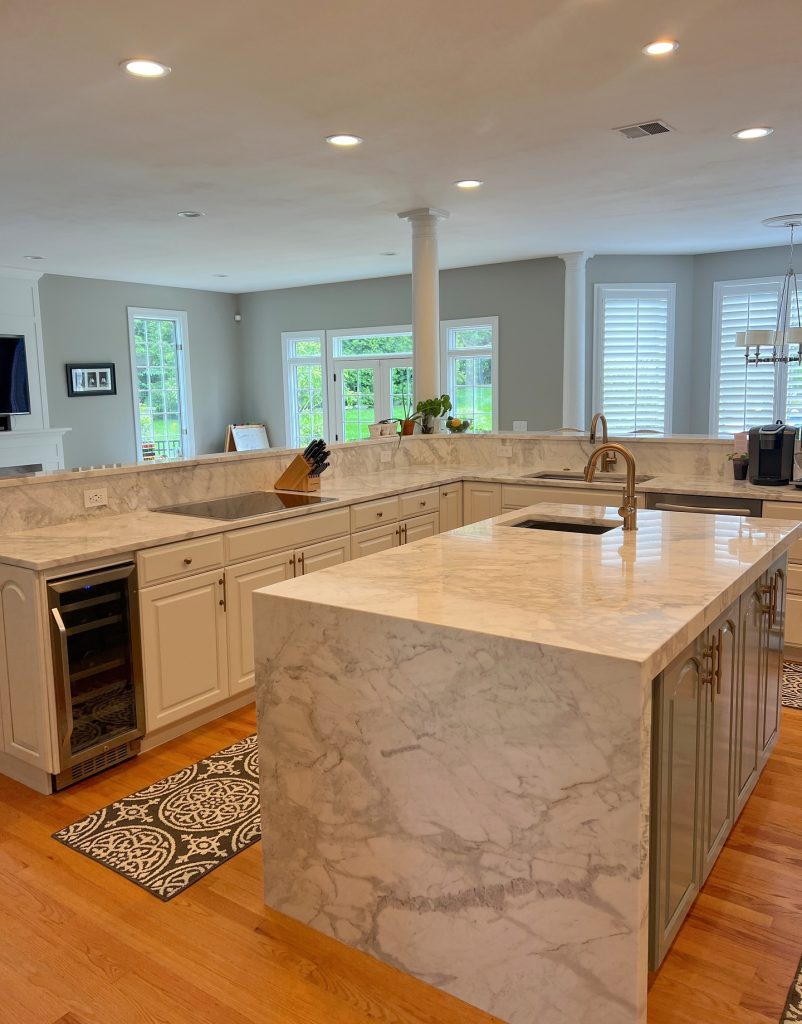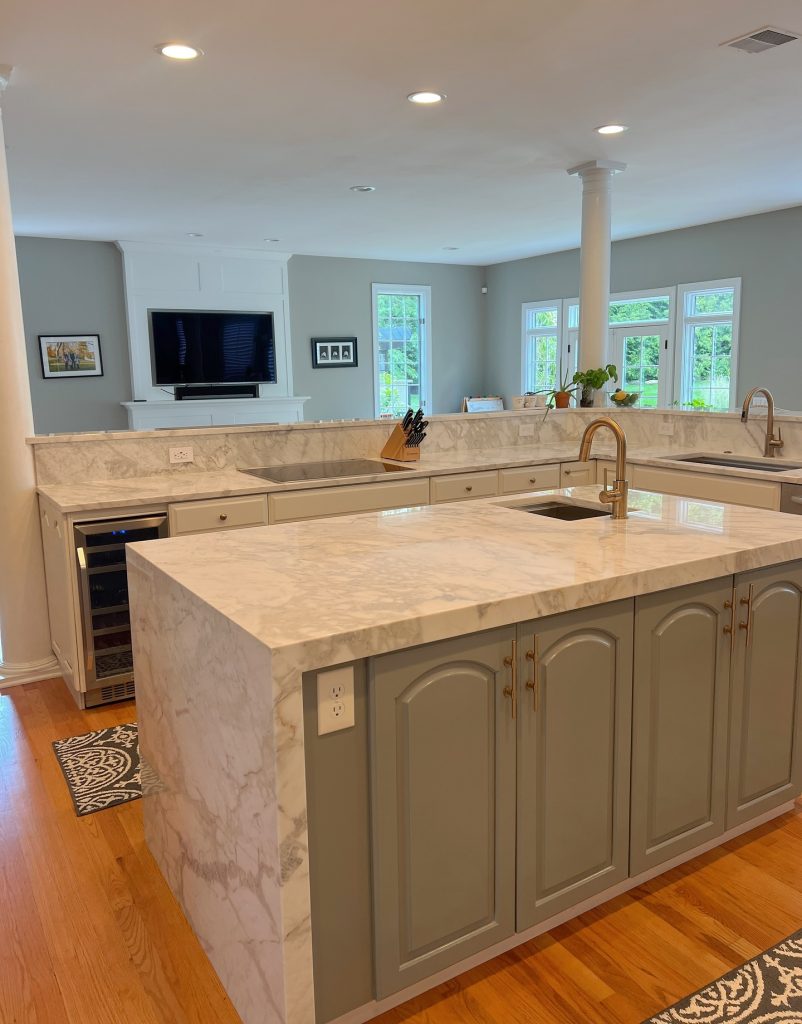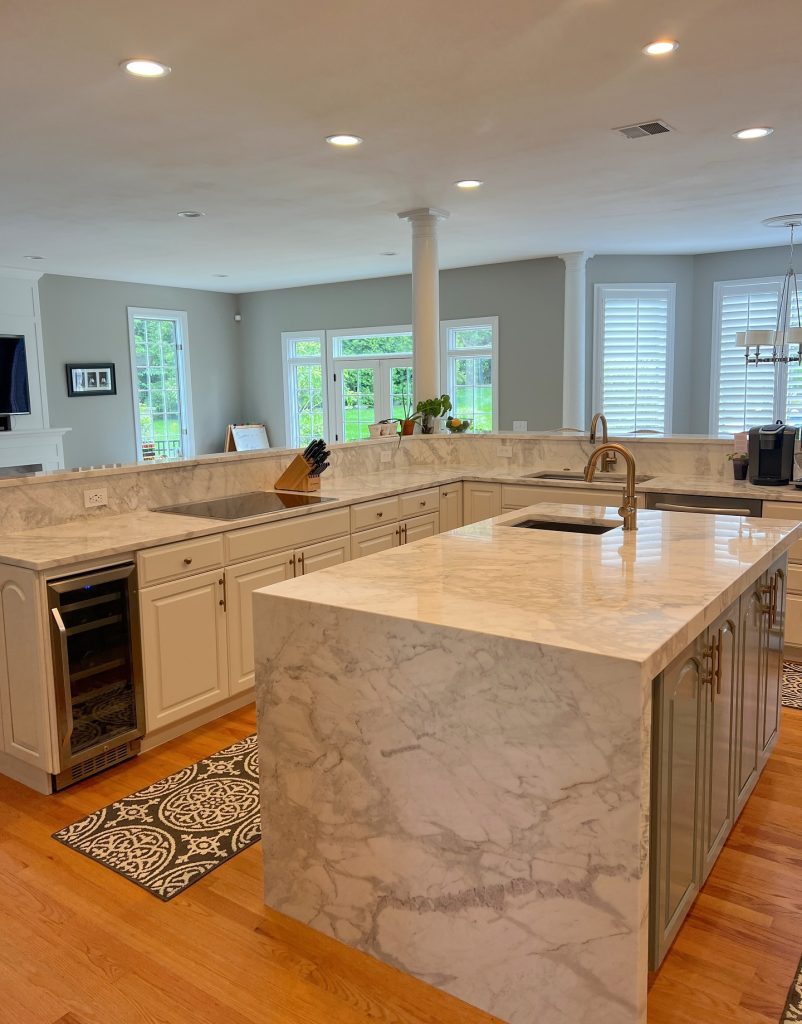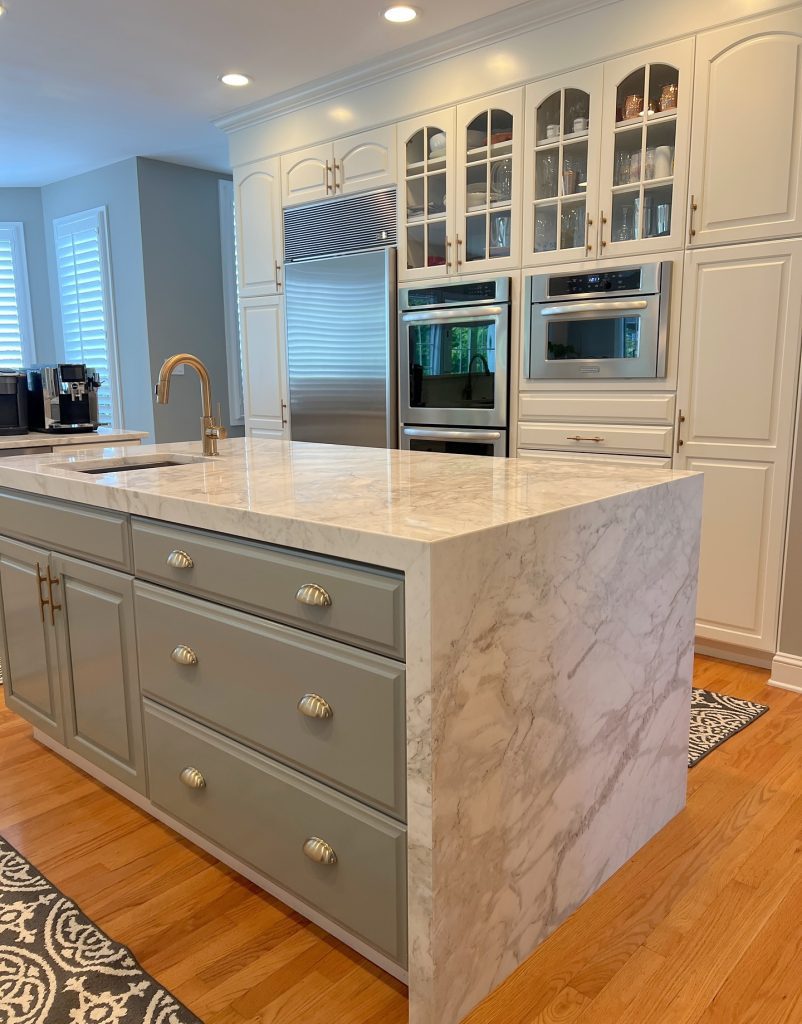

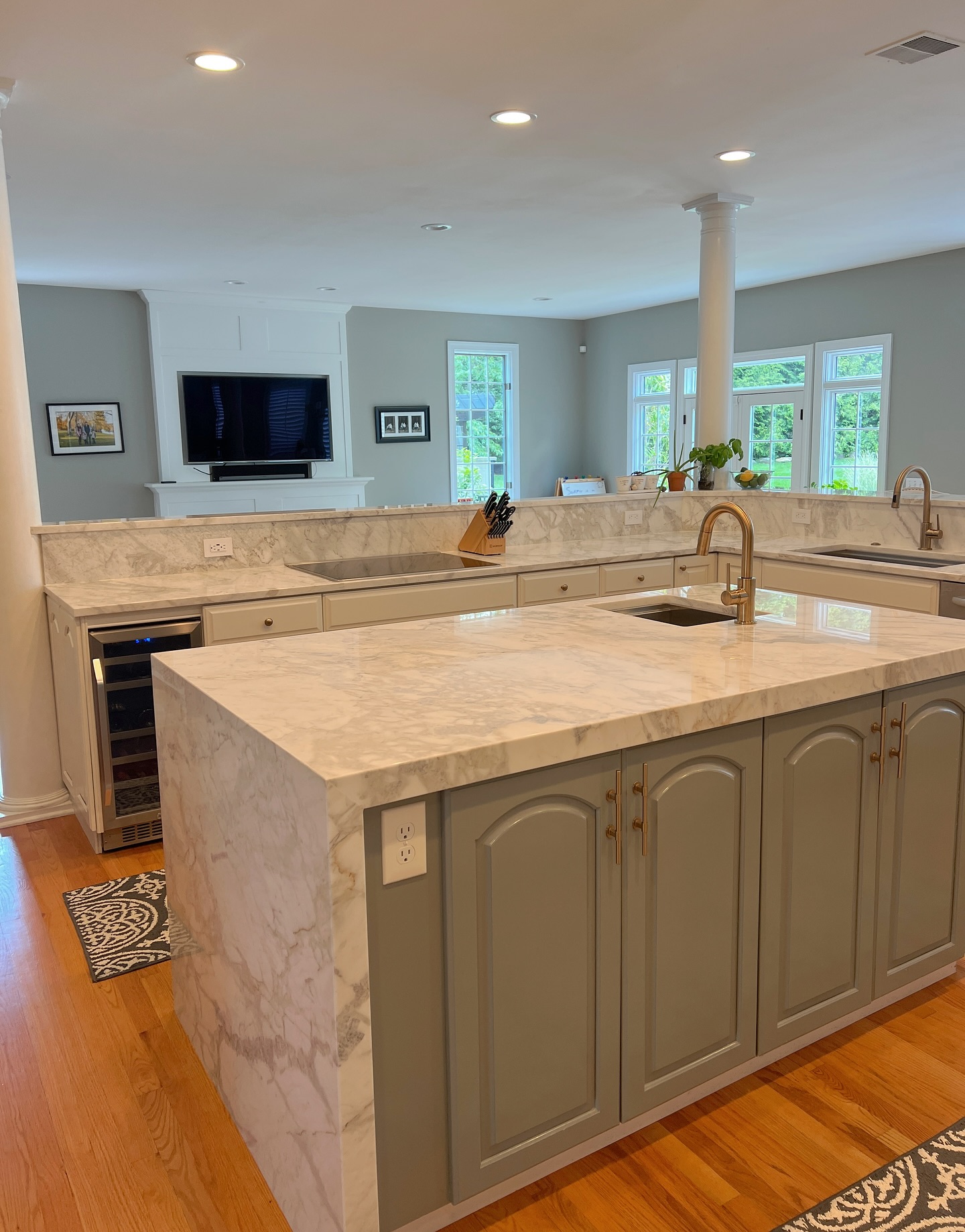
When you plan a Chicago kitchen remodel or bathroom renovation, choosing between quartz, quartzite, marble, and granite is one of the most important technical decisions you’ll make. The right material affects day-to-day durability, long-term appearance, and even resale value.
This 2025 playbook breaks down each material from a performance and engineering perspective, tailored to projects in Chicago and the 150-mile radius—including Naperville, Schaumburg, Oak Brook, Milwaukee, Madison, Rockford, Northwest Indiana, South Bend, Peoria, Springfield, Kenosha, Racine, Aurora, and Joliet.
1. Quartz: Engineered reliability for busy kitchens
What it is
Quartz countertops are an engineered surface made from:
-
~90–93% ground natural quartz
-
Pigments for consistent color
-
Polymer resins acting as a binder
The result is a non-porous, stain-resistant, and dimensionally stable surface. For many homeowners typing “countertop installation near me” into Google, quartz is the first material they are offered.
Strengths for Chicago projects
-
Excellent stain resistance – coffee, wine, and oil are easily cleaned.
-
Low porosity – no need for annual sealing.
-
High uniformity – ideal for multi-unit buildings and spec homes across Illinois and Northwest Indiana.
-
Wide color range – from pure whites to concrete greys and warm marbles.
Engineering considerations
-
Heat: Quartz resins can be damaged by high temperature. Trivets or pan stands are essential near ranges.
-
UV exposure: In sunrooms or outdoor applications, UV can cause discoloration if slabs are not specifically rated.
-
Seams: Because patterns are consistent, seams can be positioned for structural reasons rather than pattern alignment.
Best uses
-
Family kitchens with heavy daily use
-
Rental properties and multi-family units in Chicago, Aurora, Joliet, and Rockford
-
Bathroom vanities where quick cleaning is a priority
If you want “quartz countertops Illinois” that look consistent from unit to unit, quartz is still the benchmark material.
2. Quartzite: Natural stone with serious performance
What it is
Quartzite is a natural metamorphic rock formed when sandstone is subjected to high heat and pressure. The quartz grains fuse, creating a dense, hard stone with:
-
Excellent scratch resistance
-
Strong heat resistance
-
Natural veining similar to marble
In 2023, quartzite was already a “designer secret” for premium projects. By 2025, “quartzite Chicago” has become a frequent search term for homeowners who want natural stone that performs like a workhorse.
Strengths for Chicago countertop projects
-
Hardness similar to, or greater than, most granites
-
High resistance to everyday wear from knives and cookware
-
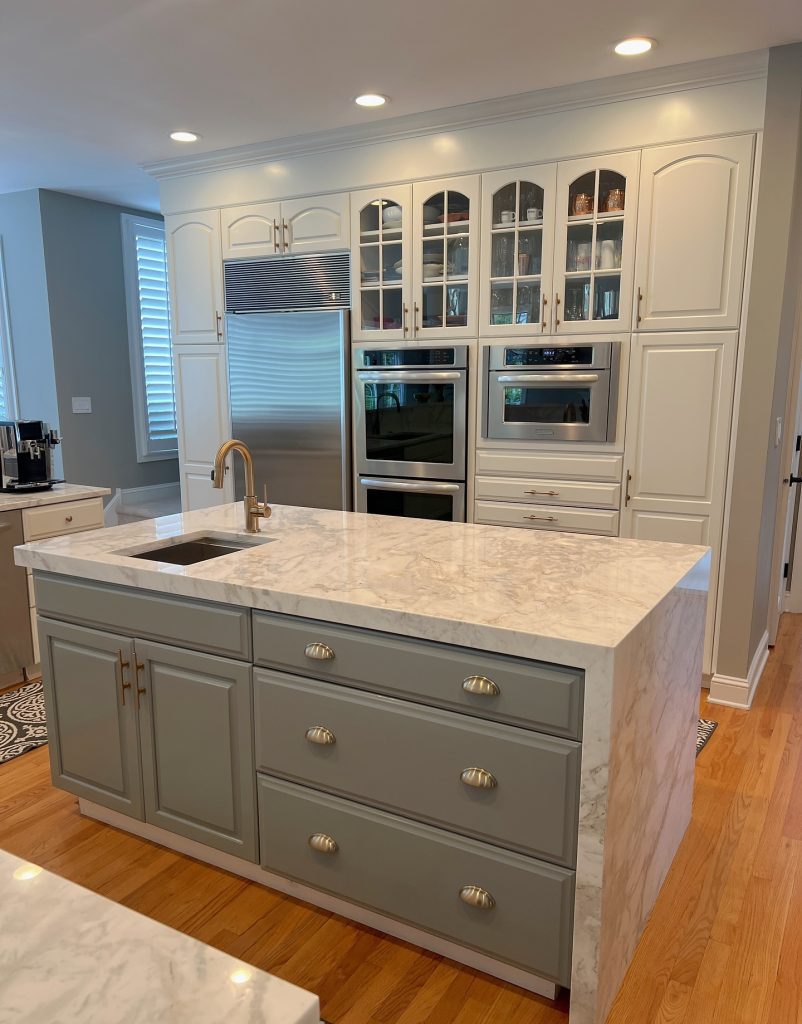
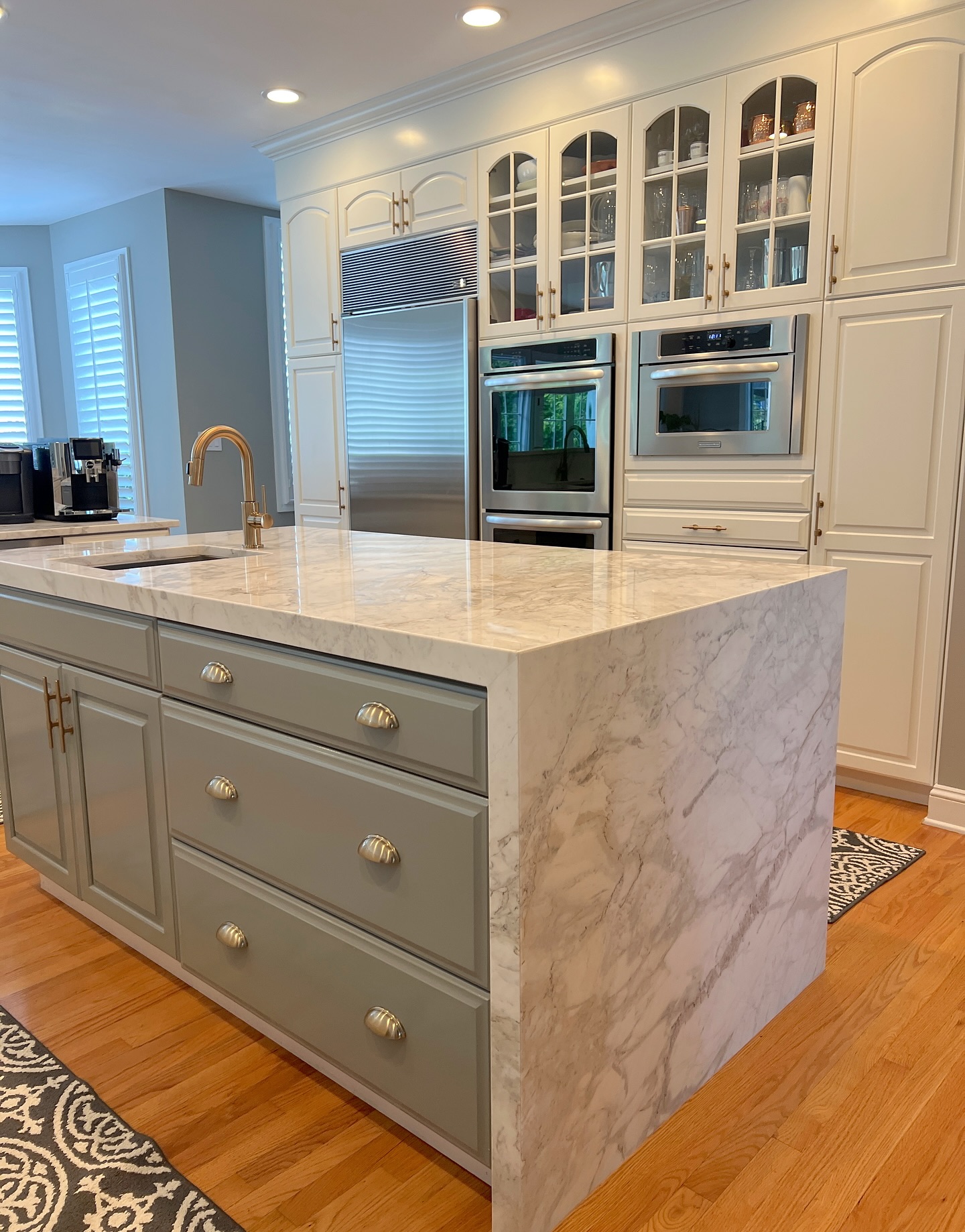
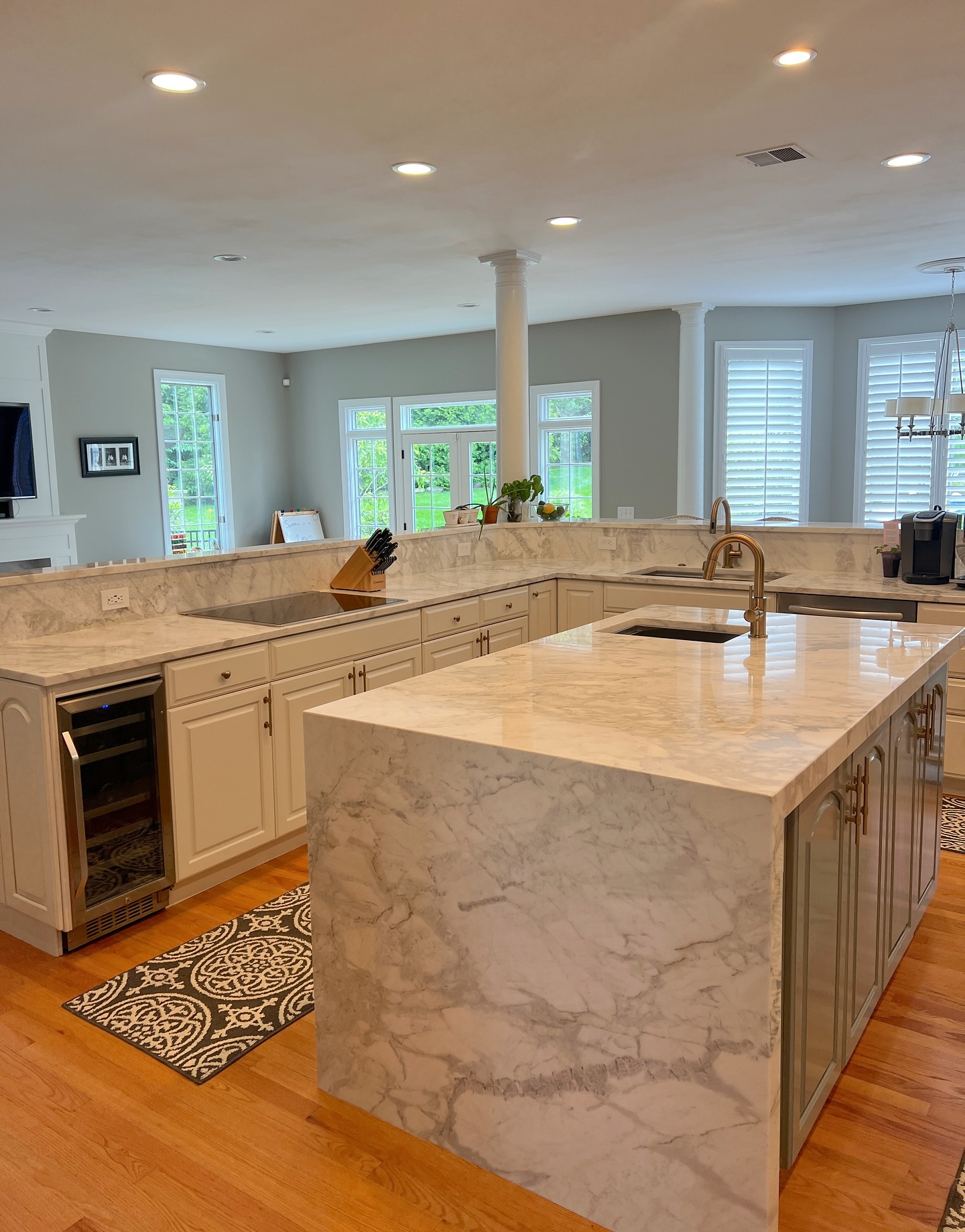
Distinctive, large-scale veining ideal for waterfall islands and feature backsplashes
-
Unique slabs – each island looks custom, not mass-produced
Engineering considerations
-
Requires proper sealing to prevent staining.
-
Not all slabs labeled “quartzite” are equal – some are mixed stones closer to marble; a reliable fabricator will test hardness and porosity.
-
Large islands demand careful vein-matched seams and reinforcement, especially with cut-outs for cooktops or sinks.
Best uses
-
Statement islands in Oak Brook, Naperville, and North Shore homes
-
Full-height backsplashes where natural movement becomes the focal point
-
Primary bathroom vanities in higher-end properties
For clients who say “I want natural stone but I’m worried about marble,” quartzite is often the correct answer.
3. Marble: Premium look, controlled application
What it is
Marble is a metamorphic stone derived from limestone. Its key characteristics:
-
Classic, recognizable veining
-
Softer surface compared to quartzite and granite
-
Higher sensitivity to acids (etching) and abrasion
In Chicago, real marble has shifted from “everywhere” to being used strategically between 2023 and 2025.
Strengths
-
Unmatched luxury appearance, especially in white and soft grey tones
-
Ideal for low-impact, design-driven surfaces
-
Adds perceived value in high-end custom builds and historical renovations
Engineering considerations
-
Requires regular sealing and more careful daily use
-
Prone to etching from lemon juice, vinegar, wine, and some cleaners
-
Softer edges benefit from rounded profiles to reduce chipping
Best uses
-
Powder rooms and primary bathroom vanities
-
Fireplace surrounds and feature walls
-
Limited-use kitchen zones (baking or pastry areas) where owners accept patina
For many Chicago homeowners, the best strategy is mixing: quartz or quartzite in heavy-use zones, and real marble where you want maximum visual impact.
4. Granite: Performance value and bold patterns
What it is
Granite is an igneous rock composed primarily of quartz and feldspar. Its key features:
-
High compressive strength
-
Good resistance to heat and scratching
-
Wide variety of natural colors and grain structures
While quartz took over many builder-grade installations, granite remains highly relevant for “granite near me” searches across Chicago and the broader region.
Strengths
-
Strong performance-to-price ratio
-
Often more economical than premium quartzite
-
Suitable for outdoor kitchens (with proper color and finish selection)
-
Available in bolder, dramatic patterns that are back in demand by 2025
Engineering considerations
-
Needs periodic sealing to maintain stain resistance
-
Some lighter granites are more porous and require stricter maintenance
-
Heavy slabs require careful planning for transport, access, and support
Best uses
-
Budget-conscious kitchen remodels that still demand natural stone
-
Outdoor kitchens in suburbs like Naperville, Aurora, and Kenosha
-
Rental properties that need durability with natural-stone appeal
5. How to choose the right material for your Chicago project
A practical engineering mindset helps:
-
Define use-case and risk level
-
Heavy daily cooking, kids, and guests? Prioritize quartz or robust quartzite.
-
Occasional use and high aesthetics? Consider marble or exotic granite.
-
-
Map materials to zones
-
Main worktops: quartz or quartzite
-
Feature island: quartzite or marble-look quartz
-
Bath vanities: quartz for family baths; quartzite or marble in primary suites
-
-
Align with your fabricator’s capabilities
-
For complex seams, bookmatching, and large islands, choose a shop known as one of the best countertop fabricator Chicago has to offer—one that can prove digital layout, test slabs, and explain reinforcement strategies.
-
By approaching material selection with performance metrics instead of marketing buzzwords, you’ll get a Chicago countertop that looks good in photos and still performs ten years from now.